Cloud computing has reshaped how modern organizations build, scale, and innovate. From startups running entirely on public cloud infrastructure to global enterprises adopting hybrid and multi-cloud strategies, the cloud is now the backbone of digital business.
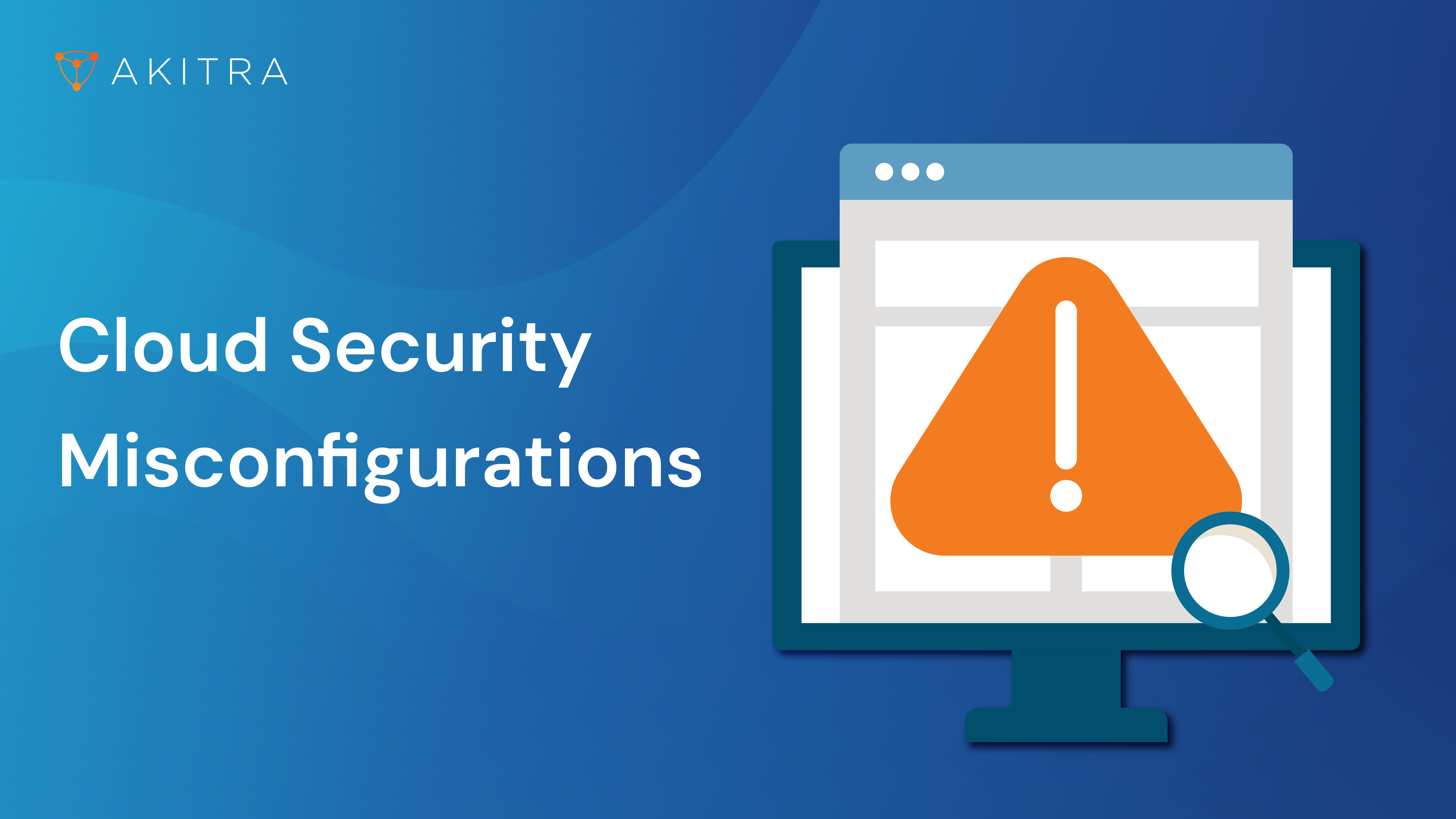
But while the cloud delivers speed and flexibility, it also introduces a quieter, more dangerous risk: cloud security misconfigurations.
Unlike ransomware or phishing attacks that announce themselves loudly, cloud security misconfigurations often sit unnoticed. A publicly exposed storage bucket, an over-privileged identity, or an unsecured API endpoint can quietly remain open for months, sometimes years, before being discovered. By then, sensitive data may already be accessed, copied, or leaked.
According to the Cloud Security Alliance, misconfigurations remain one of the leading causes of cloud data breaches, not because cloud providers are insecure, but because cloud environments are complex and shared responsibility is often misunderstood.
This blog explores what cloud security misconfigurations are, why they happen, the real-world impact they create, and how organizations can prevent them with the right combination of governance, automation, and continuous monitoring.
What Are Cloud Security Misconfigurations?
Cloud security misconfigurations occur when cloud services, resources, or settings are configured incorrectly or left in insecure default states, creating vulnerabilities that attackers can exploit.
These issues are rarely the result of malicious intent. Instead, they usually stem from human error, lack of visibility, or rapidly changing cloud environments where security controls fail to keep up with operational speed.
Common Examples of Cloud Security Misconfigurations
- Publicly Exposed Storage
Cloud storage services such as Amazon S3, Azure Blob Storage, or Google Cloud Storage are frequently misconfigured to allow public access. When sensitive customer data, intellectual property, or backups are stored without proper access controls, attackers don’t need sophisticated exploits; they just need to find it.
- Excessive Identity and Access Permissions
Granting users or service accounts more privileges than necessary violates the principle of least privilege. Over-permissioned identities significantly increase the blast radius if credentials are compromised.
- Unrestricted Network Access
Security groups, firewalls, or network ACLs configured with open inbound rules (such as 0.0.0.0/0) expose workloads directly to the internet, making them easy targets for scanning and exploitation.
- Disabled or Missing Logging and Monitoring
When logging is disabled or misconfigured, organizations lose visibility into what’s happening in their cloud environment, making it nearly impossible to detect and investigate security incidents.
A Cybersecurity Insiders report found that 93% of organizations experienced at least one cloud security incident caused by misconfiguration, highlighting how widespread and persistent this issue has become.
Why Cloud Security Misconfigurations Are So Dangerous
The true danger of cloud security misconfigurations lies in how quietly they operate. They don’t crash systems or disrupt services immediately. Instead, they expose organizations to long-term, compounding risk.
1. Data Breaches and Data Leakage
Misconfigured cloud environments are one of the most common root causes of cloud data breaches. Sensitive data, including PII, PHI, financial records, and proprietary business information, can be accessed without authentication if it is publicly exposed.
Once data is accessed, organizations may have no visibility into how long it was exposed or who accessed it, significantly increasing breach impact and reporting obligations.
2. Regulatory and Compliance Violations
Cloud security misconfigurations can directly violate regulatory requirements, such as:
- GDPR (General Data Protection Regulation)
- HIPAA (Health Insurance Portability and Accountability Act)
- SOC 2, ISO 27001, and PCI DSS
Regulators expect organizations to implement appropriate technical and organizational safeguards. Misconfigured access controls or unsecured storage can be interpreted as negligence, leading to fines, audits, and reputational damage.
For example, GDPR penalties can reach up to €20 million or 4% of global annual revenue, whichever is higher. (Source: https://gdpr.eu)
3. Operational Downtime and Business Disruption
When misconfigurations are discovered, often during audits or after a breach, organizations may be forced to pause services, rotate credentials, rebuild infrastructure, or conduct forensic investigations.
The result?
Lost revenue, delayed product launches, customer churn, and strained internal teams scrambling to respond.
4. Expanded Attack Surface
Each misconfigured resource effectively enlarges the attack surface. Attackers routinely scan cloud environments for exposed assets, weak permissions, and unsecured endpoints. Once one weakness is found, it can often be chained with others to escalate privileges and move laterally.
What Causes Cloud Security Misconfigurations?
Understanding the root causes is essential for prevention. Cloud security misconfigurations don’t happen in isolation; they are symptoms of broader organizational and operational challenges.
Cloud Environment Complexity
Modern cloud environments are dynamic by design. Organizations use multiple cloud providers, hundreds of services, and thousands of resources that change daily.
Each provider has its own configuration models, terminology, and security controls. Without centralized visibility, inconsistencies and gaps inevitably appear.
Skills and Expertise Gaps
Cloud security requires specialized knowledge that blends infrastructure, identity, networking, and compliance expertise. Many organizations adopt cloud platforms faster than they can train teams, leaving security responsibilities unclear or improperly executed.
Human Error Under Pressure
Speed is often prioritized over security. Developers and engineers are under constant pressure to deploy faster, which increases the likelihood of misconfigurations slipping through, especially when security reviews are manual or inconsistent.
Weak Governance and Policy Enforcement
Without clear security policies and enforcement mechanisms, teams may configure resources based on convenience rather than security. Inconsistent standards across teams and projects make misconfigurations almost inevitable.
Best Practices to Prevent Cloud Security Misconfigurations
Preventing cloud security misconfigurations requires shifting from reactive fixes to continuous, proactive security management.
Apply the Principle of Least Privilege
Access should be limited to only what is necessary, nothing more. Regularly review permissions for users, service accounts, and third-party integrations to ensure privileges remain appropriate over time.
Automate Configuration Monitoring
Manual reviews don’t scale. Cloud Security Posture Management (CSPM) tools continuously scan cloud environments for misconfigurations, policy violations, and risky changes in real time.
Automation ensures that security controls keep pace with infrastructure changes.
Conduct Regular Audits and Assessments
Routine cloud security audits help identify misconfigurations early. Align audits with recognized frameworks such as NIST CSF, CIS Benchmarks, and ISO 27001 to ensure consistent security standards.
CIS Benchmarks for cloud platforms are available here:
Strengthen Logging, Monitoring, and Alerts
Enable comprehensive logging across cloud services and integrate logs into centralized monitoring systems. Alerts should notify security teams immediately when high-risk configuration changes occur.
Invest in Employee Training and Awareness
Security tools alone are not enough. Engineers, DevOps teams, and administrators should be trained on secure cloud configuration practices and understand the real-world consequences of misconfigurations.
The Role of Continuous Cloud Security
Traditional, point-in-time security checks are no longer sufficient. Cloud environments change constantly, which means security must be continuous.
Organizations that adopt continuous monitoring, automated policy enforcement, and real-time remediation drastically reduce their exposure to misconfiguration-driven risks while also improving audit readiness and compliance posture.
Conclusion
Cloud security misconfigurations are not theoretical risks; they are among the most common and costly causes of cloud security incidents today. The danger lies in their silence, persistence, and scale.
By understanding how misconfigurations occur and adopting continuous, automated security practices, organizations can dramatically reduce risk, strengthen compliance, and build trust in their cloud environments.
In the cloud, security isn’t a one-time setup; it’s an ongoing commitment.
Security, AI Risk Management, and Compliance with Akitra!
In the competitive landscape of SaaS businesses, trust is paramount amidst data breaches and privacy concerns. Akitra addresses this need with its leading AI-powered Compliance Automation platform. Our platform empowers customers to prevent sensitive data disclosure and mitigate risks, meeting the expectations of customers and partners in the rapidly evolving landscape of data security and compliance. Through automated evidence collection and continuous monitoring, paired with customizable policies, Akitra ensures organizations are compliance-ready for various frameworks such as SOC 1, SOC 2, HIPAA, GDPR, PCI DSS, ISO 27001, ISO 27701, ISO 27017, ISO 27018, ISO 9001, ISO 13485, ISO 42001, NIST 800-53, NIST 800-171, NIST AI RMF, FedRAMP, CCPA, CMMC, SOX ITGC, and more such as CIS AWS Foundations Benchmark, Australian ISM and Essential Eight etc. In addition, companies can use Akitra’s Risk Management product for overall risk management using quantitative methodologies such as Factorial Analysis of Information Risks (FAIR) and qualitative methods, including NIST-based for your company, Vulnerability Assessment and Pen Testing services, Third Party Vendor Risk Management, Trust Center, and AI-based Automated Questionnaire Response product to streamline and expedite security questionnaire response processes, delivering huge cost savings. Our compliance and security experts provide customized guidance to navigate the end-to-end compliance process confidently. Last but not least, we have also developed a resource hub called Akitra Academy, which offers easy-to-learn short video courses on security, compliance, and related topics of immense significance for today’s fast-growing companies.
Our solution offers substantial time and cost savings, including discounted audit fees, enabling fast and cost-effective compliance certification. Customers achieve continuous compliance as they grow, becoming certified under multiple frameworks through a single automation platform.
Build customer trust. Choose Akitra TODAY! To book your FREE DEMO, contact us right here.
FAQ’s
Why are cloud misconfigurations so common?
They are common due to cloud complexity, rapid deployment cycles, skills gaps, and reliance on manual configuration and reviews.
Can cloud providers prevent misconfigurations?
Cloud providers secure the underlying infrastructure, but customers are responsible for configuring their environments securely under the shared responsibility model.
How do misconfigurations affect compliance?
Misconfigurations can violate regulations like GDPR, HIPAA, SOC 2, and ISO 27001, leading to fines, audits, and reputational damage.
What is the best way to prevent cloud security misconfigurations?
The most effective approach combines least-privilege access, automation, CSPM tools, continuous monitoring, and employee training.