Key Takeaways
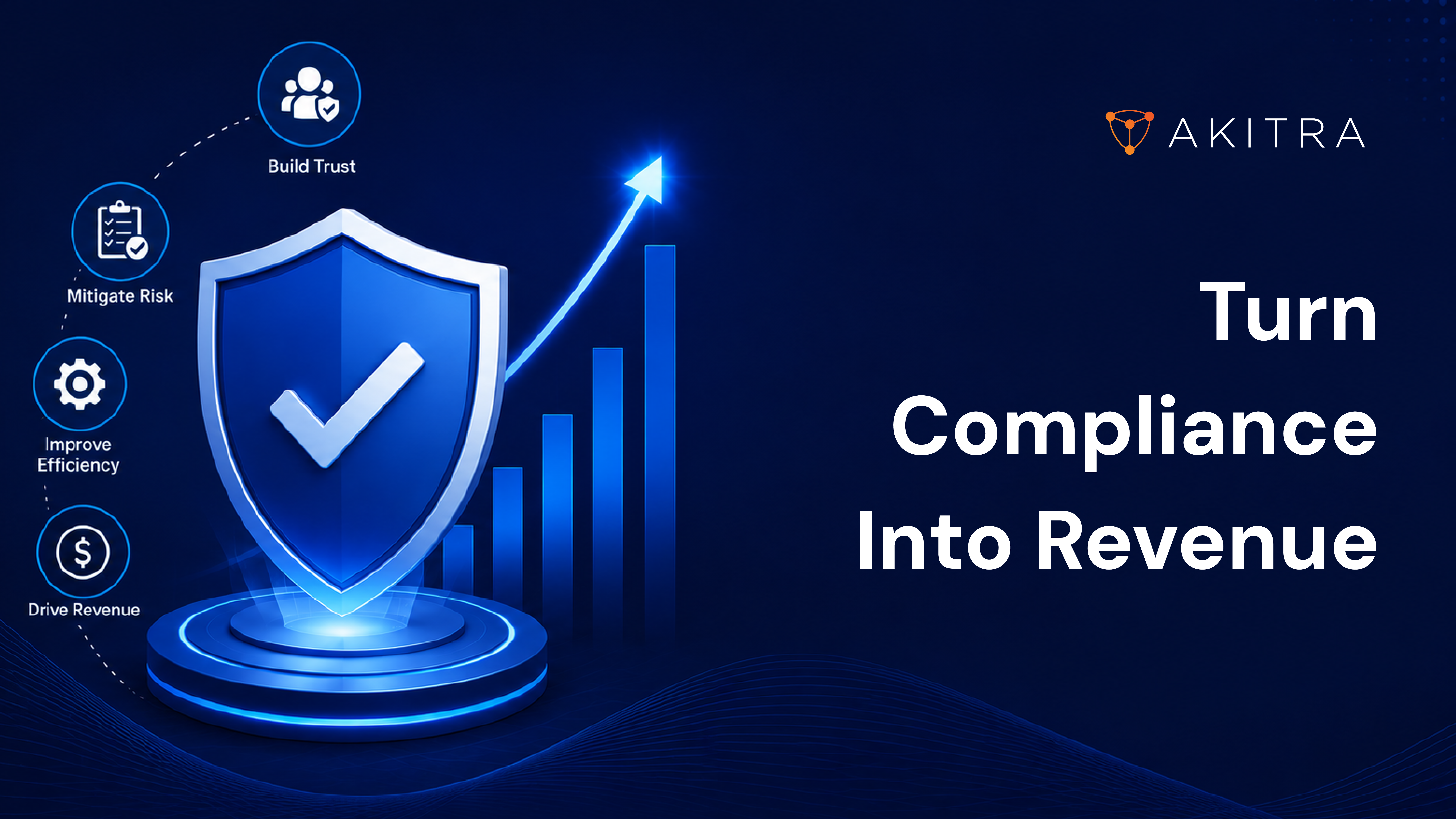
- Compliance now drives revenue and growth, not just audits.
- Strong compliance programs build buyer trust early and accelerate enterprise sales.
- Continuous monitoring and automated evidence collection reduce operational friction.
- Cross-functional alignment between security, legal, compliance, and sales improves business outcomes.
- Mature compliance signals operational maturity and market readiness, enabling expansion into larger or regulated markets.
- Continuous compliance transforms compliance from a cost center into a business enabler, unlocking new revenue opportunities.
Why Is Compliance Becoming a Revenue Engine?
For years, compliance was treated as a necessary expense, something organizations did to satisfy auditors, meet regulations, and avoid penalties.
But enterprise buying behavior has changed. Today, security, compliance, and trust directly influence:
- Whether buyers shortlist vendors
- How quickly deals move forward
- How confidently enterprises adopt new technologies
As a result, compliance is no longer operating quietly in the background.
It has become a revenue engine that impacts growth, customer trust, and enterprise sales velocity.
The Old View: Compliance as a Cost Center
Traditionally, compliance was viewed as:
- A checkbox exercise
- An annual audit project
- A reactive operational burden
Organizations focused on:
- Passing audits
- Maintaining documentation
- Avoiding regulatory issues
This created several problems:
- Compliance operated separately from business goals
- Security reviews slowed down deals
- Teams spent months collecting evidence manually
- Compliance investments were difficult to justify internally
Compliance was seen as a cost of doing business, not a driver of business outcomes.
What Changed?
The shift happened because enterprise buyers became more risk-aware.
Modern organizations now evaluate vendors based on:
- Security posture
- Compliance maturity
- Data handling practices
- Operational transparency
This means trust is now part of the buying decision itself.
Before signing contracts, buyers want proof that vendors:
- Can securely handle data
- Maintain strong controls
- Continuously manage risk
Compliance moved from the audit room into the sales process.
How Compliance Became a Revenue Engine
1. Compliance Builds Buyer Confidence Earlier
Enterprise buyers don’t want uncertainty during procurement.
When organizations can demonstrate:
- Recognized certifications
- Strong controls
- Clear security practices
buyers gain confidence faster.
This reduces hesitation during:
- Vendor evaluations
- Security reviews
- Procurement approvals
Faster trust-building directly impacts deal progression.
2. Compliance Reduces Friction in Enterprise Sales
One of the biggest delays in enterprise sales is due diligence.
Without structured compliance processes:
- Security questionnaires take longer
- Documentation requests create bottlenecks
- Buyers wait for validation from multiple teams
Organizations with mature compliance operations can:
- Respond faster
- Share evidence quickly
- Reduce repetitive back-and-forth
Less friction means faster movement through the sales cycle.
3. Compliance Improves Market Positioning
In crowded SaaS and technology markets, buyers compare vendors beyond features.
Compliance signals:
- Operational maturity
- Security commitment
- Long-term reliability
For many buyers, this becomes a differentiator.
Compliance helps organizations appear more enterprise-ready and trustworthy.
4. Compliance Supports Expansion into Larger Markets
As companies grow, they often move into:
- Enterprise accounts
- Regulated industries
- Global markets
These opportunities usually require:
- Security validation
- Formal compliance programs
- Ongoing risk management processes
Without them, expansion becomes difficult.
Compliance enables access to larger revenue opportunities that would otherwise remain blocked.
5. Continuous Compliance Creates Operational Efficiency
Modern compliance programs are no longer built around annual audit preparation.
Organizations are shifting toward:
- Continuous monitoring
- Automated evidence collection
- Centralized compliance operations
This reduces:
- Manual work
- Repetitive evidence gathering
- Last-minute audit preparation
Compliance becomes more scalable and operationally efficient over time.
The Difference Between Cost-Center Compliance and Revenue-Engine Compliance
|
Traditional Compliance |
Revenue-Engine Compliance |
|
Reactive |
Continuous |
|
Audit-focused |
Business-focused |
|
Manual evidence collection |
Automated visibility |
|
Internal process |
Customer trust enabler |
|
Operational burden |
Growth accelerator |
The mindset shift is just as important as the technology shift.
Why High-Growth Companies Think Differently About Compliance
Fast-growing organizations no longer ask: “How do we pass the audit?”
Instead, they ask:
- How do we scale trust?
- How do we reduce friction in enterprise sales?
- How do we support growth without increasing operational overhead?
This changes how compliance is funded, managed, and prioritized internally. Compliance becomes part of growth strategy – not just governance.
The Operational Challenge Behind Modern Compliance
As organizations scale, compliance complexity increases rapidly.
Teams often struggle with:
- Managing multiple frameworks simultaneously
- Keeping evidence updated continuously
- Responding quickly during active deals
- Coordinating across security, legal, compliance, and sales teams
Without the right systems, manual processes eventually slow down both operations and revenue growth.
How Modern Teams Scale Compliance Efficiently
Leading organizations are moving toward centralized, continuous compliance operations.
Platforms like Akitra Andromeda help teams:
- Continuously monitor controls
- Automate evidence collection
- Centralize compliance artifacts
- Maintain real-time visibility into compliance posture
This allows organizations to:
- Stay continuously audit-ready
- Respond faster during buyer evaluations
- Reduce operational overhead
- Scale compliance without scaling manual effort
The result is a compliance program that supports growth instead of slowing it down.
What a Revenue Engine Compliance Program Looks Like
Organizations treating compliance as a revenue engine typically focus on:
1. Continuous Readiness
Not preparing once a year, but maintaining readiness continuously.
2. Faster Buyer Validation
Making security and compliance information easy to access and verify.
3. Cross-Functional Alignment
Aligning compliance, security, legal, and sales teams around shared business goals.
4. Scalable Processes
Using automation and centralized systems to reduce operational friction.
The focus shifts from simply maintaining compliance to enabling trust at scale.
Conclusion
Compliance is no longer just about audits, policies, or avoiding risk.
It now influences:
- Buyer confidence
- Enterprise sales velocity
- Market expansion
- Operational scalability
The organizations growing fastest today understand something important: Trust drives revenue.
And compliance has become one of the systems that enables that trust at scale.
That’s why compliance is no longer a cost center, it’s a revenue engine.
Security, AI Risk Management, and Compliance with Akitra!
In the competitive landscape of SaaS businesses, trust is paramount amidst data breaches and privacy concerns. Akitra addresses this need with its leading Agentic AI-powered Compliance Automation platform. Our platform empowers customers to prevent sensitive data disclosure and mitigate risks, meeting the expectations of customers and partners in the rapidly evolving landscape of data security and compliance. Through automated evidence collection and continuous monitoring, paired with customizable policies, Akitra ensures organizations are compliance-ready for various frameworks such as SOC 1, SOC 2, HIPAA, GDPR, PCI DSS, ISO 27001, ISO 27701, ISO 27017, ISO 27018, ISO 9001, ISO 13485, ISO 42001, NIST 800-53, NIST 800-171, NIST AI RMF, FedRAMP, CCPA, CMMC, SOX ITGC, and more such as CIS AWS Foundations Benchmark, Australian ISM and Essential Eight etc. In addition, companies can use Akitra’s Risk Management product for overall risk management using quantitative methodologies such as Factorial Analysis of Information Risks (FAIR) and qualitative methods, including NIST-based for your company, Vulnerability Assessment and Pen Testing services, Third Party Vendor Risk Management, Trust Center, and AI-based Automated Questionnaire Response product to streamline and expedite security questionnaire response processes, delivering huge cost savings. Our compliance and security experts provide customized guidance to navigate the end-to-end compliance process confidently. Last but not least, we have also developed a resource hub called Akitra Academy, which offers easy-to-learn short video courses on security, compliance, and related topics of immense significance for today’s fast-growing companies.
Our solution offers substantial time and cost savings, including discounted audit fees, enabling fast and cost-effective compliance certification. Customers achieve continuous compliance as they grow, becoming certified under multiple frameworks through a single automation platform.
Build customer trust. Choose Akitra TODAY!To book your FREE DEMO, contact us right here.
FAQ’S
How does compliance help accelerate enterprise sales?
Strong compliance programs reduce friction during security reviews, vendor assessments, and procurement processes.
What is the difference between traditional compliance and continuous compliance?
Traditional compliance focuses on periodic audits, while continuous compliance maintains ongoing visibility into controls and evidence.
Can compliance improve customer trust?
Yes. Buyers increasingly evaluate vendors based on security posture, certifications, and operational transparency.
How do companies scale compliance efficiently?
Many organizations use centralized compliance platforms and automation to reduce manual work and maintain continuous readiness.