In a world where your smart refrigerator could be a hacker’s backdoor, securing IoT-enabled environments has become a priority. The Internet of Things (IoT) has transformed how we live and work, connecting billions of devices to streamline processes and enhance convenience. However, this interconnectivity has also opened Pandora’s box of cybersecurity risks and compliance challenges. As regulatory requirements grow more stringent, businesses face an uphill battle to ensure compliance in IoT ecosystems. Enter Artificial Intelligence (AI): a transformative force that is reshaping how organizations manage cybersecurity compliance in these intricate environments.
This blog explores AI’s pivotal role in managing cybersecurity compliance in IoT-enabled ecosystems, highlighting its potential, real-world applications, and the challenges it aims to overcome. Let’s dive into why AI is not just a game-changer but a necessity in the evolving IoT landscape.
The Complexity of Cybersecurity Compliance in IoT
The explosive growth of IoT devices has revolutionized industries, from healthcare and manufacturing to smart cities and homes. However, this connectivity comes at a cost. Managing compliance across a network of heterogeneous devices is a monumental task. Let’s break down the challenges:
- Volume and Diversity of Devices: IoT ecosystems comprise various devices with unique hardware and software configurations. This diversity makes it difficult to establish standardized compliance measures.
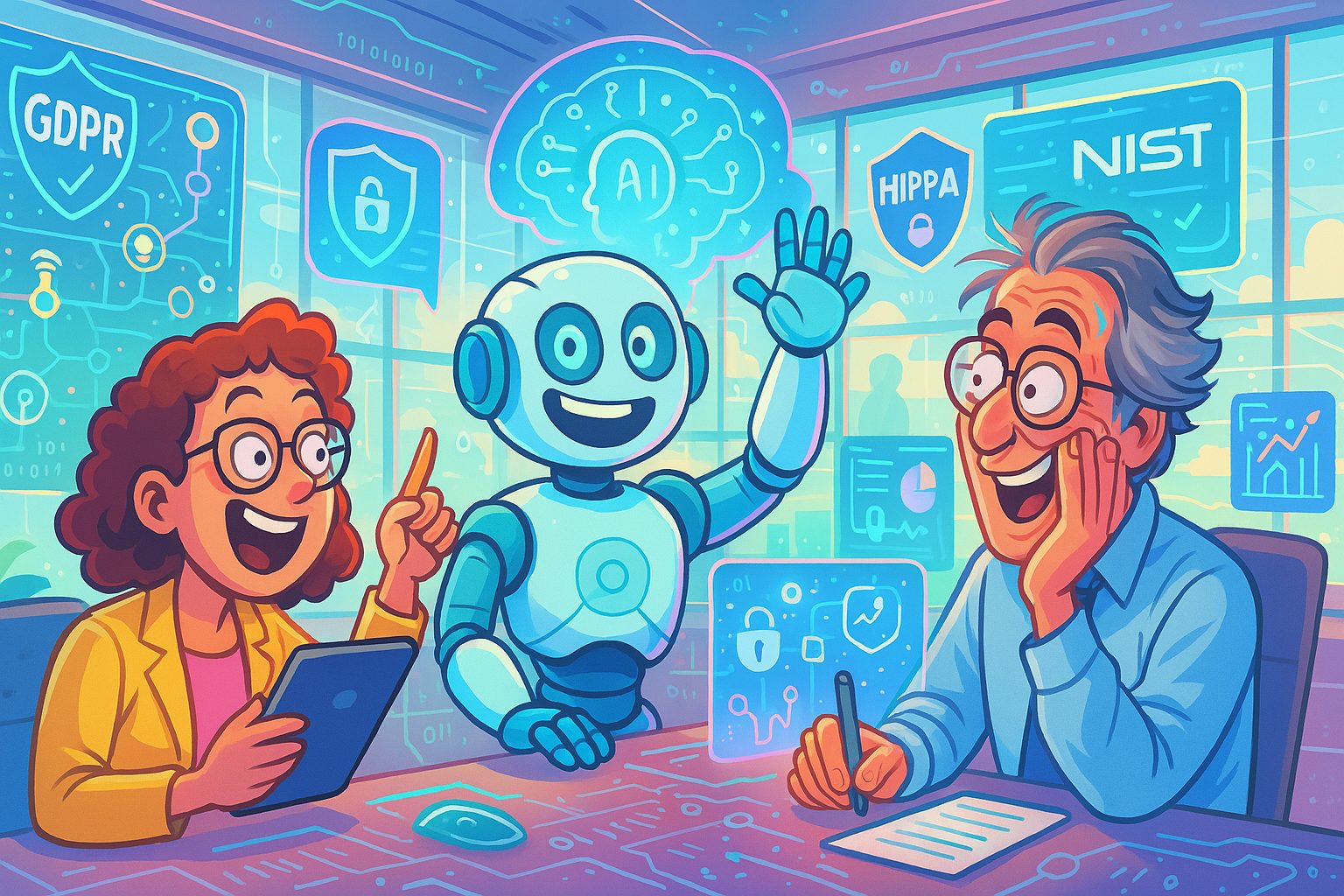
- Dynamic Regulatory Landscape: Regulations such as GDPR, HIPAA, and the NIST Cybersecurity Framework constantly evolve. Keeping up with these changes while ensuring compliance across all IoT devices is daunting.
- Interconnectivity Risks: Each IoT device represents a potential entry point for cyberattacks. A single compromised device can jeopardize an entire network, making compliance even more critical.
- Resource Constraints: Traditional compliance management methods require significant time and human resources, which are often in short supply.
These challenges underscore the need for a more efficient and scalable solution—one that AI is uniquely equipped to provide.
How AI Addresses IoT Cybersecurity Compliance Challenges
AI brings a suite of advanced capabilities to tackle the unique challenges of IoT compliance. Here are some ways AI is revolutionizing the field:
- Automated Compliance Monitoring
AI-powered tools can continuously monitor IoT networks to identify real-time compliance violations. By analyzing vast amounts of data, AI can detect device behavior or network traffic anomalies, flagging potential compliance risks before they escalate.
- Regulatory Mapping and Updates
AI tools can stay updated with the ever-changing regulatory landscape, automatically mapping IoT device configurations to relevant compliance frameworks. This ensures organizations remain compliant without manually tracking regulatory changes.
- Threat Detection and Risk Assessment
AI excels at analyzing complex patterns and predicting potential vulnerabilities. In IoT environments, AI can assess the risk profiles of devices and identify weak links that might compromise compliance.
- Policy Enforcement and Remediation
AI can automate the enforcement of compliance policies across IoT networks. In the event of a compliance breach, AI-driven systems can execute swift remediation actions to minimize damage.
Benefits of AI in IoT Cybersecurity Compliance
The integration of AI into IoT compliance management offers numerous advantages:
- Efficiency and Scalability: AI can simultaneously process and analyze data from millions of devices, making it ideal for large-scale IoT networks.
- Reduced Human Error: Automation minimizes the risk of oversight, ensuring consistent compliance across all devices.
- Faster Threat Response: AI systems can detect and respond to compliance breaches in real time, reducing the window of vulnerability.
- Cost Savings: By automating routine compliance tasks, organizations can allocate resources to more strategic initiatives, reducing overall compliance costs.
Challenges and Limitations of AI in IoT Compliance
While AI holds immense promise, it is not without its challenges:
- Data Quality and Availability: AI systems use high-quality data to function effectively. Inconsistent or incomplete data can hinder performance.
- Ethical Concerns: Biases in AI algorithms can lead to unintended consequences, such as unfair risk assessments.
- Integration Issues: Incorporating AI into legacy IoT systems can be technically challenging and resource-intensive.
- Skill Gaps: Organizations need skilled professionals to manage and optimize AI tools, which can hinder adoption.
The Future of AI in IoT Cybersecurity Compliance
As IoT ecosystems grow more complex, the role of AI will become even more critical. Emerging technologies like machine learning and natural language processing will enhance AI’s ability to manage compliance in real time. Future advancements may include:
- Predictive Compliance Models: AI systems capable of forecasting regulatory changes and proactively adapting compliance strategies.
- Collaborative AI Systems: Multiple AI tools working together to ensure holistic compliance across diverse IoT networks.
- AI-Driven Audits: Automated auditing processes that provide real-time compliance reports for regulatory authorities.
In conclusion, the convergence of AI and IoT has ushered in a new era of cybersecurity compliance management. By automating monitoring, risk assessment, and policy enforcement, AI addresses the unique challenges of IoT-enabled environments with unmatched efficiency. As regulations evolve and IoT networks expand, embracing AI-driven compliance solutions will be essential for organizations to stay secure and compliant.
Security, AI Risk Management, and Compliance with Akitra!
In the competitive landscape of SaaS businesses, trust is paramount amidst data breaches and privacy concerns. Akitra addresses this need with its leading AI-powered Compliance Automation platform. Our platform empowers customers to prevent sensitive data disclosure and mitigate risks, meeting the expectations of customers and partners in the rapidly evolving landscape of data security and compliance. Through automated evidence collection and continuous monitoring, paired with customizable policies, Akitra ensures organizations are compliance-ready for various frameworks such as SOC 1, SOC 2, HIPAA, GDPR, PCI DSS, ISO 27001, ISO 27701, ISO 27017, ISO 27018, ISO 9001, ISO 13485, ISO 42001, NIST 800-53, NIST 800-171, NIST AI RMF, FedRAMP, CCPA, CMMC, SOX ITGC, and more such as CIS AWS Foundations Benchmark, Australian ISM and Essential Eight etc. In addition, companies can use Akitra’s Risk Management product for overall risk management using quantitative methodologies such as Factorial Analysis of Information Risks (FAIR) and qualitative methods, including NIST-based for your company, Vulnerability Assessment and Pen Testing services, Third Party Vendor Risk Management, Trust Center, and AI-based Automated Questionnaire Response product to streamline and expedite security questionnaire response processes, delivering huge cost savings. Our compliance and security experts provide customized guidance to navigate the end-to-end compliance process confidently. Last but not least, we have also developed a resource hub called Akitra Academy, which offers easy-to-learn short video courses on security, compliance, and related topics of immense significance for today’s fast-growing companies.
Our solution offers substantial time and cost savings, including discounted audit fees, enabling fast and cost-effective compliance certification. Customers achieve continuous compliance as they grow, becoming certified under multiple frameworks through a single automation platform.
Build customer trust. Choose Akitra TODAY! To book your FREE DEMO, contact us right here.