At 2:14 a.m., a routine backup job failed.
No alarms went off. No dashboards flashed red. The data still existed—but no one realized it had quietly stopped being protected.
Three weeks later, during a ransomware investigation, the truth surfaced: the backups were incomplete, misconfigured, and exposed through an over-privileged cloud storage bucket.
This is how most cloud data incidents begin.
Not with a dramatic breach—but with silent drift.
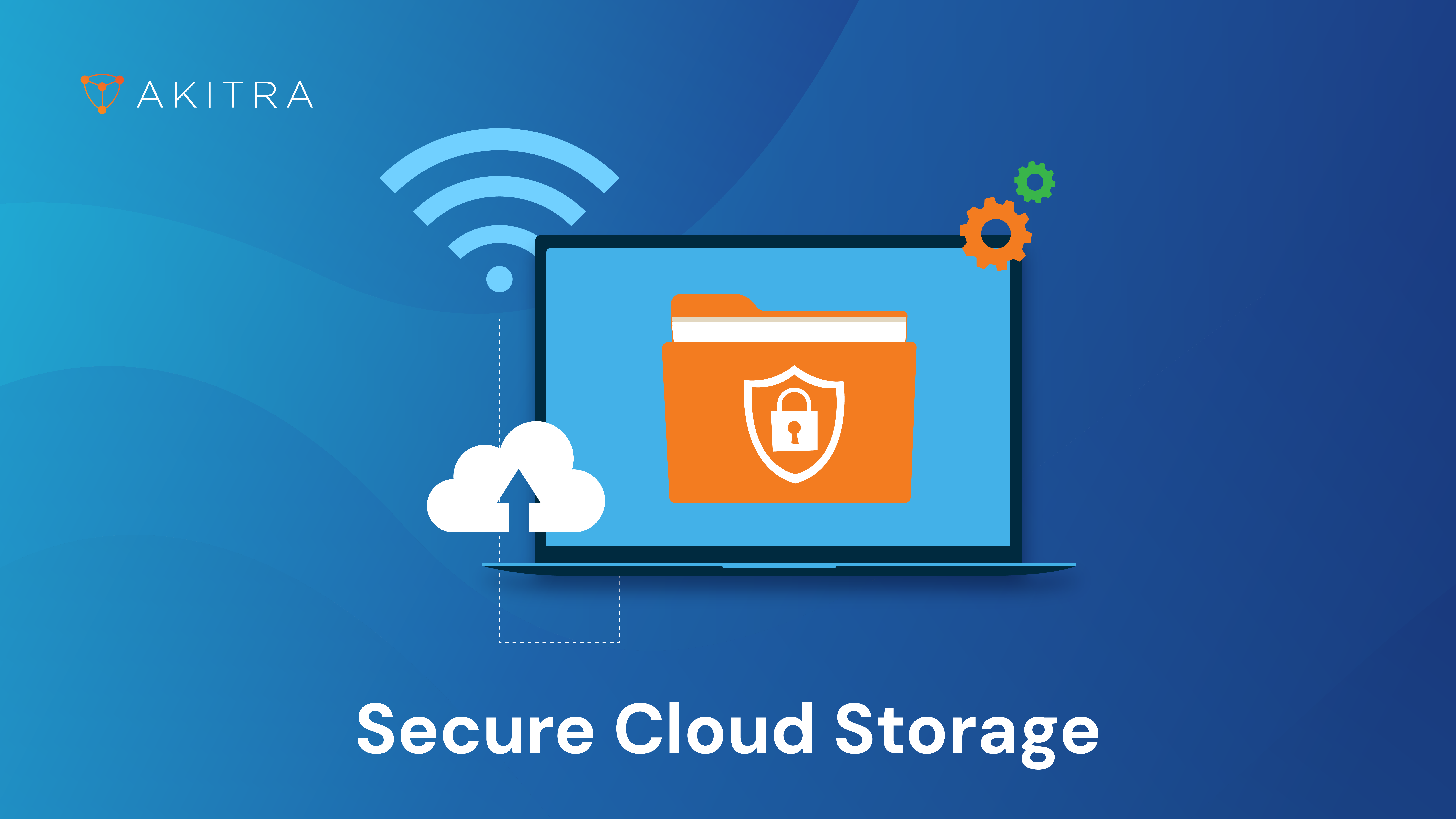
That’s why secure cloud storage has become one of the most critical foundations of modern cloud security. Not as a feature. Not as a checkbox. But as a living system that protects enterprise data and backups even as environments constantly change.
This guide walks you through how secure cloud storage really works today, why traditional approaches fail, and how security teams are modernizing protection across cloud environments—without slowing the business.
Why Secure Cloud Storage Matters More Than Ever
Cloud adoption didn’t just move data—it multiplied it.
Enterprises now store sensitive information across object storage, databases, SaaS platforms, backup vaults, data lakes, and analytics pipelines. Every new service creates another place where data can be exposed, misconfigured, or forgotten.
The challenge isn’t where data lives.
It’s how consistently it’s protected.
Secure cloud storage ensures that:
- Sensitive data is protected at rest, in transit, and during backups
- Access is limited to the right identities, at the right time
- Misconfigurations are detected before attackers exploit them
- Backups remain immutable and recoverable under attack
Without secure cloud storage, even the best detection tools are reacting too late.
What Is Secure Cloud Storage?
Secure cloud storage refers to the technologies, policies, and controls used to protect enterprise data stored in cloud environments from unauthorized access, loss, or compromise.
But here’s the key distinction most guides miss:
Secure cloud storage is data-centric, not perimeter-centric.
Instead of assuming networks are trusted, modern secure cloud storage focuses on protecting the data itself—regardless of where it moves or how it’s accessed.
At its core, secure cloud storage combines:
- Encryption and key management
- Identity-based access control
- Continuous configuration monitoring
- Backup integrity and immutability
- Visibility into data exposure risks
When done right, it quietly works in the background—until the day it saves the business.
The Hidden Risks Lurking in Cloud Storage
Most cloud storage breaches don’t happen because someone “hacked” encryption.
They happen because:
- Storage buckets were left publicly accessible
- Backup snapshots inherited excessive permissions
- Encryption keys were unmanaged or shared
- Access policies drifted over time
- Monitoring stopped at the network layer
Cloud environments change every day. Teams deploy faster than security reviews can keep up. Over time, small gaps stack into major exposure.
This is why secure cloud storage must be continuous, not point-in-time.
Core Pillars of Secure Cloud Storage
1. Encryption Everywhere (Without Exceptions)
Encryption is the foundation of secure cloud storage—but only when implemented correctly.
Best practices include:
- Encrypting data at rest using strong, cloud-native encryption
- Enforcing encryption in transit for all access paths
- Centralizing encryption key management
- Rotating keys regularly and limiting access
Encryption should be automatic, not optional. If teams can “skip” it, they eventually will.
2. Identity-Driven Access Control
In the cloud, identity is the perimeter.
Secure cloud storage relies on:
- Least-privilege access policies
- Role-based access tied to real job functions
- Just-in-time permissions for sensitive data
- Continuous review of who can access what
Most breaches involve valid credentials. Secure cloud storage reduces blast radius by ensuring those credentials can’t reach everything.
3. Continuous Configuration Monitoring
A secure configuration today doesn’t guarantee security tomorrow.
Storage settings drift as:
- New services integrate
- Teams deploy automation
- Vendors change defaults
Secure cloud storage requires continuous monitoring to detect:
- Public exposure
- Disabled encryption
- Over-permissive access
- Unprotected backups
The goal is prevention—not post-incident reporting.
4. Backup Security and Immutability
Backups are the last line of defense during ransomware incidents.
Secure cloud storage protects backups by:
- Enforcing immutability (write-once, read-many)
- Isolating backup credentials
- Encrypting backup data independently
- Continuously validating backup integrity
A backup that can be deleted, encrypted, or altered by an attacker isn’t a backup—it’s a liability.
5. Visibility Into Sensitive Data
You can’t secure what you can’t see.
Modern secure cloud storage includes visibility into:
- Where sensitive data is stored
- Who accesses it
- How often it’s used
- Whether it’s over-exposed
This visibility supports compliance, risk reduction, and faster incident response.
Secure Cloud Storage and Compliance Go Hand in Hand
Regulatory frameworks increasingly focus on data protection—not infrastructure ownership.
Secure cloud storage directly supports requirements across:
- SOC 2 (security, availability, confidentiality)
- ISO 27001 (information security controls)
- HIPAA (protected health information safeguards)
- PCI DSS (cardholder data protection)
Standards bodies like National Institute of Standards and Technology emphasize encryption, access control, and continuous monitoring as foundational security practices.
Secure cloud storage turns compliance from an annual scramble into an ongoing, defensible posture.
You can explore NIST guidance on data protection controls here:
External reference: https://www.nist.gov/cyberframework
How Secure Cloud Storage Fails Without Automation
Manual reviews don’t scale in dynamic cloud environments.
Security teams that rely on spreadsheets and quarterly audits struggle with:
- Configuration drift
- Missed exposures
- Inconsistent enforcement
- Alert fatigue
Automation enables secure cloud storage to adapt in real time—detecting risks, enforcing policies, and maintaining protection as environments evolve.
This shift is what separates resilient cloud programs from reactive ones.
A Real-World Cloud Storage Security Turning Point
One SaaS company believed its cloud storage was secure. Encryption was enabled. Access policies existed. Backups were scheduled.
But after a routine access review, they discovered:
- A legacy service account had access to production backups
- Encryption keys were shared across environments
- Backup immutability wasn’t enforced
No breach had occurred-yet.
By tightening secure cloud storage controls, enforcing identity-based access, and validating backup protection, they eliminated multiple silent failure points before attackers found them.
That’s the real power of secure cloud storage: stopping incidents that never make headlines.
What to Look for in a Secure Cloud Storage Strategy
When evaluating or improving secure cloud storage, ask:
- Is encryption enforced by default everywhere?
- Are access permissions continuously reviewed?
- Can we detect misconfigurations in real time?
- Are backups isolated and immutable?
- Do we have visibility into sensitive data exposure?
If any answer is “not sure,” that’s your signal.
Final Thoughts: Secure Cloud Storage Is a Strategy, Not a Setting
Secure cloud storage isn’t something you “turn on” and forget.
It’s an evolving system that protects enterprise data and backups as cloud environments grow, change, and accelerate.
The organizations that get this right don’t wait for incidents to expose weaknesses. They build secure cloud storage into the foundation of how data is stored, accessed, and protected—every day.
And when the next 2:14 a.m. backup job runs, they can finally sleep.
Security, AI Risk Management, and Compliance with Akitra!
In the competitive landscape of SaaS businesses, trust is paramount amidst data breaches and privacy concerns. Akitra addresses this need with its leading Agentic AI-powered Compliance Automation platform. Our platform empowers customers to prevent sensitive data disclosure and mitigate risks, meeting the expectations of customers and partners in the rapidly evolving landscape of data security and compliance. Through automated evidence collection and continuous monitoring, paired with customizable policies, Akitra ensures organizations are compliance-ready for various frameworks such as SOC 1, SOC 2, HIPAA, GDPR, PCI DSS, ISO 27001, ISO 27701, ISO 27017, ISO 27018, ISO 9001, ISO 13485, ISO 42001, NIST 800-53, NIST 800-171, NIST AI RMF, FedRAMP, CCPA, CMMC, SOX ITGC, and more such as CIS AWS Foundations Benchmark, Australian ISM and Essential Eight etc. In addition, companies can use Akitra’s Risk Management product for overall risk management using quantitative methodologies such as Factorial Analysis of Information Risks (FAIR) and qualitative methods, including NIST-based for your company, Vulnerability Assessment and Pen Testing services, Third Party Vendor Risk Management, Trust Center, and AI-based Automated Questionnaire Response product to streamline and expedite security questionnaire response processes, delivering huge cost savings. Our compliance and security experts provide customized guidance to navigate the end-to-end compliance process confidently. Last but not least, we have also developed a resource hub called Akitra Academy, which offers easy-to-learn short video courses on security, compliance, and related topics of immense significance for today’s fast-growing companies.
Our solution offers substantial time and cost savings, including discounted audit fees, enabling fast and cost-effective compliance certification. Customers achieve continuous compliance as they grow, becoming certified under multiple frameworks through a single automation platform.
Build customer trust. Choose Akitra TODAY!To book your FREE DEMO, contact us right here.
FAQ’S
Is encryption alone enough for secure cloud storage?
No. Encryption must be paired with access control, configuration monitoring, and backup protection to be effective.
How does secure cloud storage prevent ransomware?
By enforcing immutability, isolating backups, and limiting access, secure cloud storage prevents attackers from encrypting or deleting recovery data.
Does secure cloud storage help with compliance?
Yes. It directly supports regulatory requirements for data protection, access control, and audit readiness.
How often should cloud storage security be reviewed?
Continuously. Cloud environments change daily, making ongoing monitoring essential.