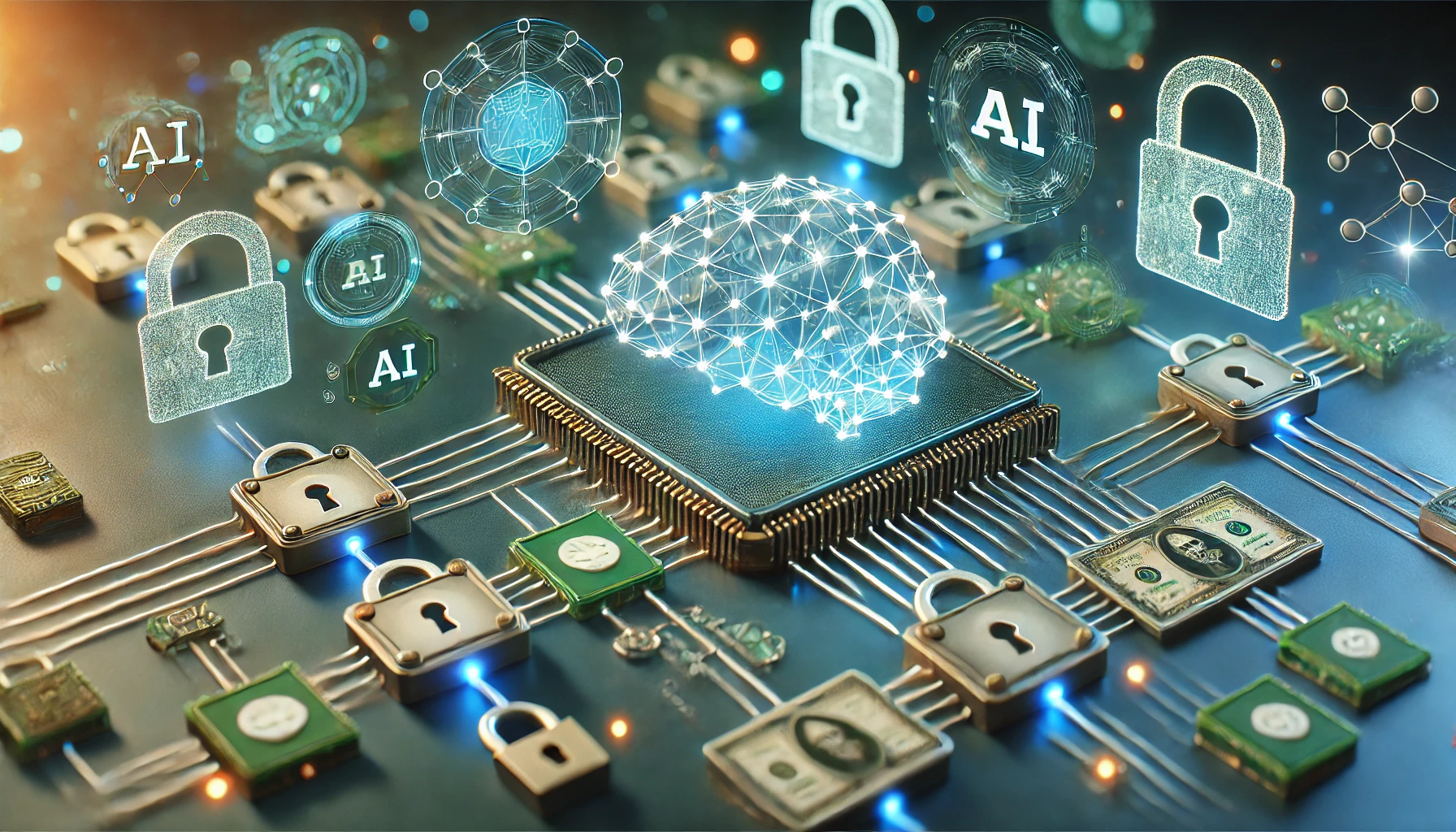
As cyber-attacks become more sophisticated, the systems meant to keep us safe must also progress. The combination of blockchain technology and artificial intelligence (AI) opens up new possibilities for cybersecurity. It provides a vision of when impenetrable cryptographic walls protect your data and are constantly watched by AI. Not only does this AI defend itself from attacks, but it also keeps learning from them and gets stronger every time. This blockchain and AI synergy is not some far-off pipe dream; it is already taking shape and has the potential to change the cybersecurity landscape completely. However, like any powerful alliance, it brings with it both immense potential and significant challenges that must be carefully navigated.
Understanding AI and Blockchain
Before delving into the synergy between AI and blockchain, it’s crucial to understand the individual strengths each technology offers.
AI in Cybersecurity
Artificial Intelligence, often envisioned as the brain behind modern automation, plays a pivotal role in cybersecurity. It encompasses a spectrum of technologies, including machine learning (ML), deep learning, and neural networks, all designed to mimic human intelligence. In cybersecurity, AI has evolved into a formidable force for threat detection, response automation, and predictive analytics.
Consider AI’s role in identifying zero-day vulnerabilities—those elusive bugs that lurk unnoticed in software until hackers exploit them. Traditional methods struggle to detect these threats until it’s too late. AI, however, can analyze vast amounts of data in real-time, identifying anomalies and potential threats long before they manifest into actual attacks. This proactive approach prevents breaches and enables security teams to respond faster and more effectively.
Blockchain in Cybersecurity
Blockchain, often celebrated for its role in cryptocurrencies like Bitcoin, is much more than just the backbone of digital currencies. Blockchain is a decentralized and immutable ledger storing data in linked or “chained” blocks. Each block is secured using cryptographic principles, ensuring that once data is recorded, it cannot be altered without altering all subsequent blocks—a feat nearly impossible without the network consensus.
In cybersecurity, blockchain’s decentralized nature eliminates the single point of failure—a critical vulnerability in traditional security systems. It ensures data integrity, transparency, and security, making it an ideal solution for industries where data tampering is not an option. Blockchain is also being used for secure transactions, decentralized identity management, and more, proving its versatility and robustness in protecting sensitive information.
Opportunities at the Intersection of AI and Blockchain
When combined, AI and blockchain create a symbiotic relationship that enhances cybersecurity in ways previously unimaginable. Here’s how they can work together to offer unparalleled protection:
- Enhanced Security Measures
One of the most promising aspects of integrating AI with blockchain is the enhancement of security measures. AI’s ability to process and analyze vast amounts of data can be harnessed to monitor blockchain networks for suspicious activity. For instance, AI algorithms can be trained to identify fraudulent transactions on a blockchain, flagging them in real-time. This level of scrutiny ensures that threats are detected and mitigated before they can cause significant damage.
Moreover, AI can enhance the cryptographic methods used in blockchain, developing new encryption techniques that are more resistant to quantum computing—a looming threat on the horizon. By combining AI’s adaptive capabilities with blockchain’s immutable ledger, organizations can achieve a new level of dynamic and resilient security.
- Improved Data Integrity and Transparency
Data integrity and transparency are fundamental to any secure system, and the combination of AI and blockchain significantly bolsters these aspects. Blockchain’s decentralized ledger ensures that data remains consistent across all nodes, while AI can be used to verify this data continuously, ensuring its accuracy and integrity.
For example, in supply chain management, blockchain can record every transaction or movement of goods, while AI analyzes this data to detect discrepancies or inefficiencies. This enhances transparency and ensures that the data is tamper-proof and accurate, reducing the risk of fraud and errors.
- Automated Threat Detection and Response
AI’s ability to learn and adapt over time makes it an invaluable tool for automated threat detection and response. When integrated with blockchain, AI can monitor and analyze transactions in real-time, automatically responding to threats as they emerge.
Imagine a smart contract on a blockchain that executes based on predefined criteria. AI can enhance this contract by continuously monitoring the environment and adjusting the contract’s terms based on real-time data. If a security threat is detected, the AI can automatically trigger a response—such as freezing accounts or reversing transactions—without human intervention. This level of automation improves security and reduces the time it takes to respond to threats.
- Decentralized Identity and Access Management
Identity theft and unauthorized access remain some of the most significant challenges in cybersecurity. Integrating AI and blockchain offers a promising solution through decentralized identity and access management.
Blockchain’s decentralized architecture ensures that identity information is not stored in a single location, reducing the risk of large-scale breaches. AI can further enhance this by providing more secure and user-friendly advanced authentication mechanisms, such as biometric verification.
For instance, AI can use facial recognition, voice patterns, or even behavioral analysis to verify a user’s identity, storing the verification data on a blockchain. This approach enhances security and gives users more control over their personal information, as they can decide who has access to their data and under what conditions.
Challenges in Integrating AI and Blockchain in Cybersecurity
While the opportunities are compelling, integrating AI and blockchain in cybersecurity is not without its challenges. These must be addressed to realize the potential of this powerful combination fully.
- Scalability Issues
One of the most significant challenges is scalability. Blockchain networks, especially public ones, can be slow and resource-intensive. When combined with AI, which requires substantial computational power to process and analyze data, the result can be latency issues and bottlenecks.
For instance, AI algorithms that analyze blockchain data may require rapid access to vast amounts of information, but blockchain’s decentralized nature can slow down this process. This is particularly problematic in applications requiring real-time data processing, such as fraud detection or automated response systems.
- Complexity and Integration
Integrating AI and blockchain within existing cybersecurity frameworks is not a trivial task. Both technologies are complex and require specialized knowledge to implement effectively. The challenge lies not only in the integration but also in the interoperability between different systems and platforms.
Organizations must ensure that their AI and blockchain solutions are compatible with their existing infrastructure, which can be a significant undertaking. This often requires the development of new protocols, APIs, and interfaces, which can be time-consuming and costly.
- Data Privacy and Security
While blockchain is celebrated for its transparency, this feature can pose challenges for data privacy, especially in regions with stringent data protection laws like the GDPR in Europe. Balancing blockchain’s transparency with the need for privacy is a complex issue that requires careful consideration.
AI can potentially exacerbate this challenge by processing and analyzing vast amounts of personal data stored on blockchains. Ensuring that this data is processed in a way that complies with privacy regulations while still benefiting from blockchain’s transparency and security is a delicate balancing act.
- Cost and Resource Requirements
Implementing AI and blockchain solutions is costly. Both technologies require significant investment in time, money, and resources. The computational power needed to run AI algorithms, combined with blockchain’s storage and processing requirements, can be prohibitively expensive for many organizations.
Moreover, the ongoing costs associated with maintaining and updating these systems can add up over time, making it a challenging proposition for businesses, especially small and medium-sized enterprises (SMEs).
In conclusion, the intersection of AI and blockchain in cybersecurity represents a powerful convergence of technologies that, when combined, can offer unprecedented levels of protection against cyber threats. However, with great power comes great responsibility. The potential of these technologies to revolutionize cybersecurity is immense, but so are the challenges they bring. Organizations must carefully consider how to harness this power effectively, from scalability issues to the complexities of integration and the ever-present concerns about data privacy and cost.
Security, AI Risk Management, and Compliance with Akitra!
In the competitive landscape of SaaS businesses, trust is paramount amidst data breaches and privacy concerns. Akitra addresses this need with its leading AI-powered Compliance Automation platform. Our platform empowers customers to prevent sensitive data disclosure and mitigate risks, meeting the expectations of customers and partners in the rapidly evolving landscape of data security and compliance. Through automated evidence collection and continuous monitoring, paired with customizable policies, Akitra ensures organizations are compliance-ready for various frameworks such as SOC 1, SOC 2, HIPAA, GDPR, PCI DSS, ISO 27001, ISO 27701, ISO 27017, ISO 27018, ISO 9001, ISO 13485, ISO 42001, NIST 800-53, NIST 800-171, NIST AI RMF, FedRAMP, CCPA, CMMC, SOX ITGC, and more such as CIS AWS Foundations Benchmark, Australian ISM and Essential Eight etc. In addition, companies can use Akitra’s Risk Management product for overall risk management using quantitative methodologies such as Factorial Analysis of Information Risks (FAIR) and qualitative methods, including NIST-based for your company, Vulnerability Assessment and Pen Testing services, Third Party Vendor Risk Management, Trust Center, and AI-based Automated Questionnaire Response product to streamline and expedite security questionnaire response processes, delivering huge cost savings. Our compliance and security experts provide customized guidance to navigate the end-to-end compliance process confidently. Last but not least, we have also developed a resource hub called Akitra Academy, which offers easy-to-learn short video courses on security, compliance, and related topics of immense significance for today’s fast-growing companies.
Our solution offers substantial time and cost savings, including discounted audit fees, enabling fast and cost-effective compliance certification. Customers achieve continuous compliance as they grow, becoming certified under multiple frameworks through a single automation platform.
Build customer trust. Choose Akitra TODAY! To book your FREE DEMO, contact us right here.