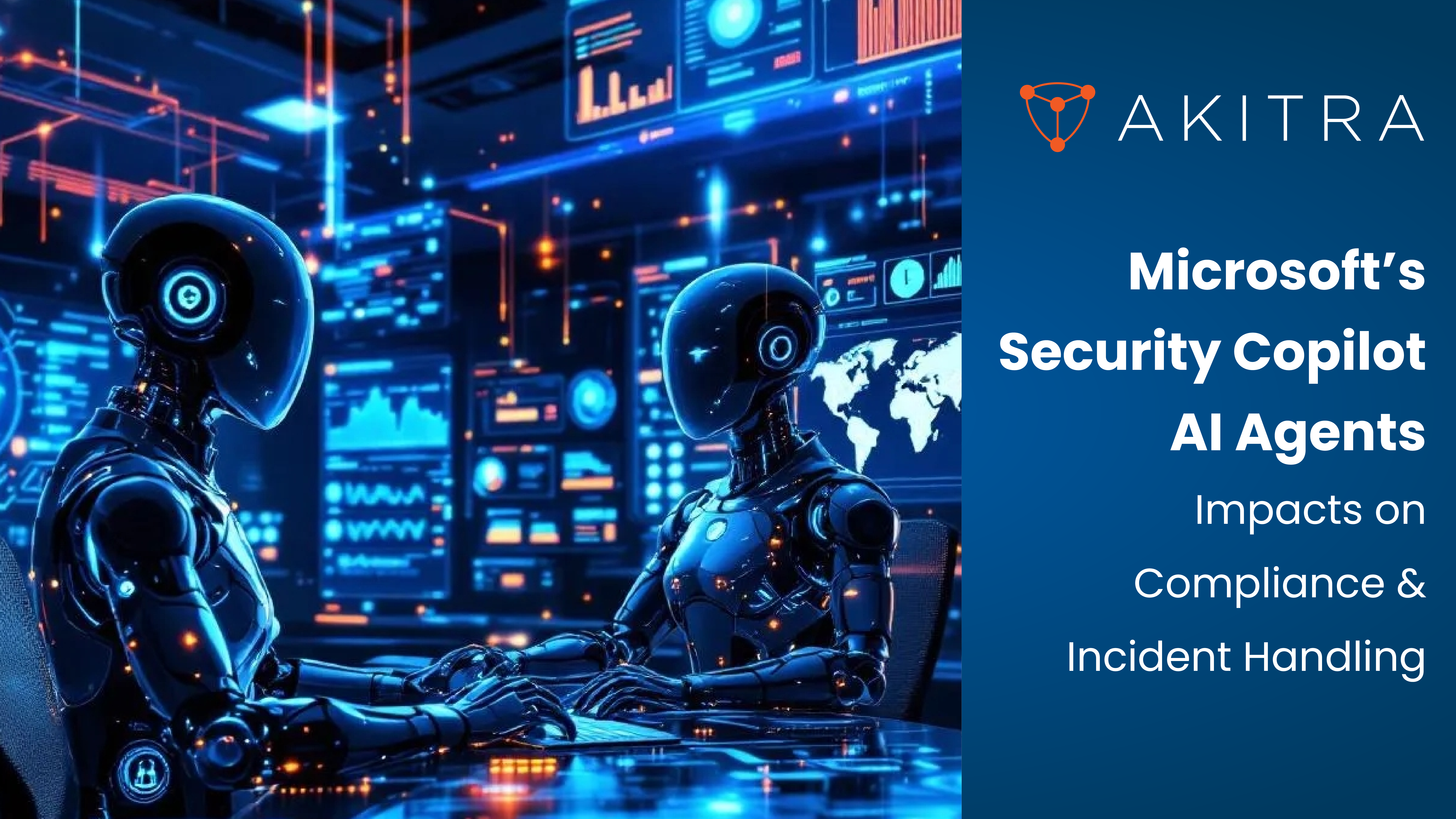
In today’s threat-heavy digital landscape, the rules of cybersecurity are being rewritten every day. Enterprises are moving beyond static tools and playbooks, they’re turning toward intelligent, adaptive systems powered by AI. One of the most talked-about entrants in this new frontier is Microsoft’s Security Copilot, a generative AI solution built to transform how organizations detect, investigate, and respond to security incidents.
But beyond its technical brilliance lies something deeper: the potential to reinforce Layered Security, a philosophy that no single tool or defense line can stop every attack, but together, multiple layers of intelligent safeguards can create a resilient security posture.
This blog examines how Microsoft’s Security Copilot redefines the Layered Security model, enhances compliance readiness, and transforms incident handling across modern enterprises.
The Evolution of Layered Security in the AI Era
The principle of Layered Security isn’t new. It’s been the cornerstone of cybersecurity architecture for decades, combining firewalls, antivirus tools, encryption, identity management, and continuous monitoring to create depth in defense.
However, the complexity of hybrid cloud environments, remote workforces, and sophisticated adversaries has pushed traditional approaches to their limits. Static rule-based systems can’t keep up with threats that morph in milliseconds.
Enter Microsoft’s Security Copilot, an AI assistant that uses GPT-4 and Microsoft’s threat intelligence to provide real-time analysis, contextual alerts, and guided remediation steps. Instead of adding another tool to the stack, it intelligently connects existing layers of defense, from Azure Sentinel to Defender, into a cohesive ecosystem.
This is where AI elevates Layered Security from a static structure to a dynamic, adaptive framework.
Understanding Microsoft’s Security Copilot
At its core, Microsoft’s Security Copilot is a Generative AI companion for security professionals. Built on OpenAI’s GPT-4 model and integrated with Microsoft’s global threat intelligence database, it serves as a co-pilot for analysts, summarizing incidents, generating scripts, analyzing telemetry, and suggesting next steps.
Key capabilities include:
- Threat Contextualization: Converts raw signals into contextual narratives for faster triage.
- Automated Summaries: Produces executive-ready incident reports in seconds.
- Forensic Analysis: Cross-references millions of signals across Microsoft’s security stack.
- Compliance Insights: Maps detected activities to compliance frameworks like SOC 2, ISO 27001, and NIST.
- Continuous Learning: Improves over time through human feedback and evolving threat patterns.
By embedding itself within the Layered Security architecture, Security Copilot doesn’t replace human expertise, it amplifies it.
Layered Security: The Strategic Backbone
To understand the impact of Security Copilot, it’s essential to revisit what makes Layered Security so vital.
In essence, it’s about distributing protection across multiple zones:
- Perimeter Defense – Firewalls, intrusion detection systems.
- Network Security – Segmentation and monitoring.
- Endpoint Security – Device protection, patching, and EDR tools.
- Application Security – Secure code practices and vulnerability scanning.
- Data Security – Encryption and access control.
- User Security – Identity, access management, and awareness.
- Governance and Compliance – Continuous adherence to standards and frameworks.
Microsoft’s Security Copilot strengthens these layers by acting as a connective intelligence layer, interpreting data between tools, correlating anomalies, and providing guided actions. This is the evolution of Layered Security, a fusion of human oversight, automated defense, and contextual AI reasoning.
Reinventing Compliance Through Intelligent Automation
Compliance has long been seen as a box-ticking exercise, collecting evidence, generating reports, and waiting for audits. However, in the era of AI, compliance is shifting from a reactive to a proactive approach.
Microsoft’s Security Copilot directly supports compliance efforts through:
- Automated Mapping: It automatically links security incidents and logs to specific compliance controls, like “Access Control” or “Incident Response.”
- Audit Readiness: Security Copilot generates detailed documentation and summaries aligned with standards such as ISO 27001, SOC 2, and GDPR.
- Continuous Monitoring: Instead of point-in-time assessments, AI enables ongoing visibility into compliance.
- Policy Enforcement: By integrating with Defender and Purview, Copilot ensures that compliance policies are not just written but continuously enforced.
When coupled with a strong Layered Security framework, organizations can achieve continuous compliance, where controls are live, monitored, and adaptive rather than static checkboxes.
How Security Copilot Enhances Incident Handling
Incident handling has always been the stress test for cybersecurity maturity. The faster an organization can detect, analyze, and contain an incident, the lower its impact.
Microsoft’s Security Copilot enhances this process by embedding AI-driven insights at every stage of the incident lifecycle:
- Detection:
By analyzing billions of daily threat signals, Copilot correlates anomalies across Microsoft 365 Defender, Sentinel, and third-party integrations to surface actionable alerts.
- Investigation:
Instead of sifting through thousands of log lines, analysts can ask, “What’s the root cause of this alert?” Copilot narrates the event chain, identifies affected assets, and highlights probable attack paths.
- Response:
Copilot can generate PowerShell scripts or Defender playbooks for containment, ensuring rapid mitigation without human delay.
- Post-Incident Reporting:
It automatically generates executive summaries and compliance-ready documentation, connecting incidents to frameworks such as NIST 800-61 or ISO 27035.
In short, it turns reactive firefighting into Layered Security intelligence, where every layer (endpoint, cloud, user, network) contributes data to a unified, AI-driven response.
Benefits Beyond Detection: Human + AI Synergy
The most powerful shift introduced by Microsoft’s Security Copilot isn’t automation; it’s augmentation.
Security Copilot is designed to enhance human decision-making, not replace it. It bridges the gap between novice analysts and seasoned incident responders by democratizing expertise.
Key advantages include:
- Accelerated Analysis: Tasks that took hours now take minutes.
- Contextual Awareness: Each alert comes with a background, not just numbers.
- Decision Confidence: AI provides probabilities, not guesses, giving analysts a trusted assistant.
- Skill Amplification: Even junior team members can handle complex investigations with the guidance of Copilot.
- Reduced Fatigue: With AI handling repetitive triage, human teams focus on strategy and prevention.
When embedded into Layered Security architecture, these advantages compound, creating a living defense ecosystem that learns, adapts, and responds faster than attackers evolve.
Potential Challenges and Governance Considerations
Of course, AI-driven cybersecurity isn’t without its challenges. While Microsoft’s Security Copilot marks a major advancement, organizations must still manage:
- Data Privacy: Ensuring sensitive telemetry doesn’t expose internal patterns.
- AI Explainability: Making sure automated decisions are auditable for compliance.
- Human Oversight: Avoiding over-reliance on automation without contextual review.
- Integration Gaps: Aligning Security Copilot insights with existing SIEM and SOAR workflows.
This is where Layered Security becomes essential again, as it places governance, validation, and auditability at every stage of the AI-assisted defense lifecycle.
The Future of Layered Security: From Reactive to Predictive
As AI continues to evolve, the future of Layered Security will lean toward predictive defense, anticipating threats before they occur.
With systems like Microsoft’s Security Copilot, the industry is witnessing the beginning of self-learning defense frameworks that continuously refine their detection and response patterns. These systems could soon identify vulnerabilities in code before deployment, simulate potential attacks on network topologies, and prioritize remediation based on business impact, all autonomously.
The combination of human insight, AI-driven automation, and compliance intelligence represents the next generation of cybersecurity, where Layered Security isn’t a static design, but an intelligent, continuously improving ecosystem.
Conclusion
In a world of increasing complexity and cyber uncertainty, Microsoft’s Security Copilot stands as a defining moment in the evolution of cybersecurity.
It doesn’t just automate processes; it transforms how organizations think about security, compliance, and trust. By embedding AI agents into every layer of defense, businesses can move from reactive protection to proactive Layered Security, ensuring that compliance isn’t a burden but a byproduct of intelligent operations.Ultimately, the goal isn’t to replace human expertise but to amplify it with machine intelligence, to create a future where incident handling is faster, compliance is continuous, and every decision is backed by real-time insight.
Security, AI Risk Management, and Compliance with Akitra!
In the competitive landscape of SaaS businesses, trust is paramount amidst data breaches and privacy concerns. Akitra addresses this need with its leading Agentic AI-powered Compliance Automation platform. Our platform empowers customers to prevent sensitive data disclosure and mitigate risks, meeting the expectations of customers and partners in the rapidly evolving landscape of data security and compliance. Through automated evidence collection and continuous monitoring, paired with customizable policies, Akitra ensures organizations are compliance-ready for various frameworks such as SOC 1, SOC 2, HIPAA, GDPR, PCI DSS, ISO 27001, ISO 27701, ISO 27017, ISO 27018, ISO 9001, ISO 13485, ISO 42001, NIST 800-53, NIST 800-171, NIST AI RMF, FedRAMP, CCPA, CMMC, SOX ITGC, and more such as CIS AWS Foundations Benchmark, Australian ISM and Essential Eight etc. In addition, companies can use Akitra’s Risk Management product for overall risk management using quantitative methodologies such as Factorial Analysis of Information Risks (FAIR) and qualitative methods, including NIST-based for your company, Vulnerability Assessment and Pen Testing services, Third Party Vendor Risk Management, Trust Center, and AI-based Automated Questionnaire Response product to streamline and expedite security questionnaire response processes, delivering huge cost savings. Our compliance and security experts provide customized guidance to navigate the end-to-end compliance process confidently. Last but not least, we have also developed a resource hub called Akitra Academy, which offers easy-to-learn short video courses on security, compliance, and related topics of immense significance for today’s fast-growing companies.
Our solution offers substantial time and cost savings, including discounted audit fees, enabling fast and cost-effective compliance certification. Customers achieve continuous compliance as they grow, becoming certified under multiple frameworks through a single automation platform.
Build customer trust. Choose Akitra TODAY!To book your FREE DEMO, contact us right here.
FAQ’S
How does Security Copilot improve Layered Security?
It acts as an intelligence layer that connects existing tools, like Azure Sentinel, Defender, and others, making every security layer smarter and more responsive.
Can Security Copilot support compliance requirements?
Yes. It maps security incidents to frameworks like SOC 2, ISO 27001, and NIST automatically, enabling real-time compliance visibility and faster audits.
Is Microsoft’s Security Copilot fully autonomous?
No. It’s designed to augment human analysts, not replace them, offering insights, summaries, and recommendations that enhance decision-making.
How does Security Copilot impact incident response time?
By summarizing logs, correlating signals, and suggesting remediation steps, it can reduce investigation and response times by up to 60–70%.