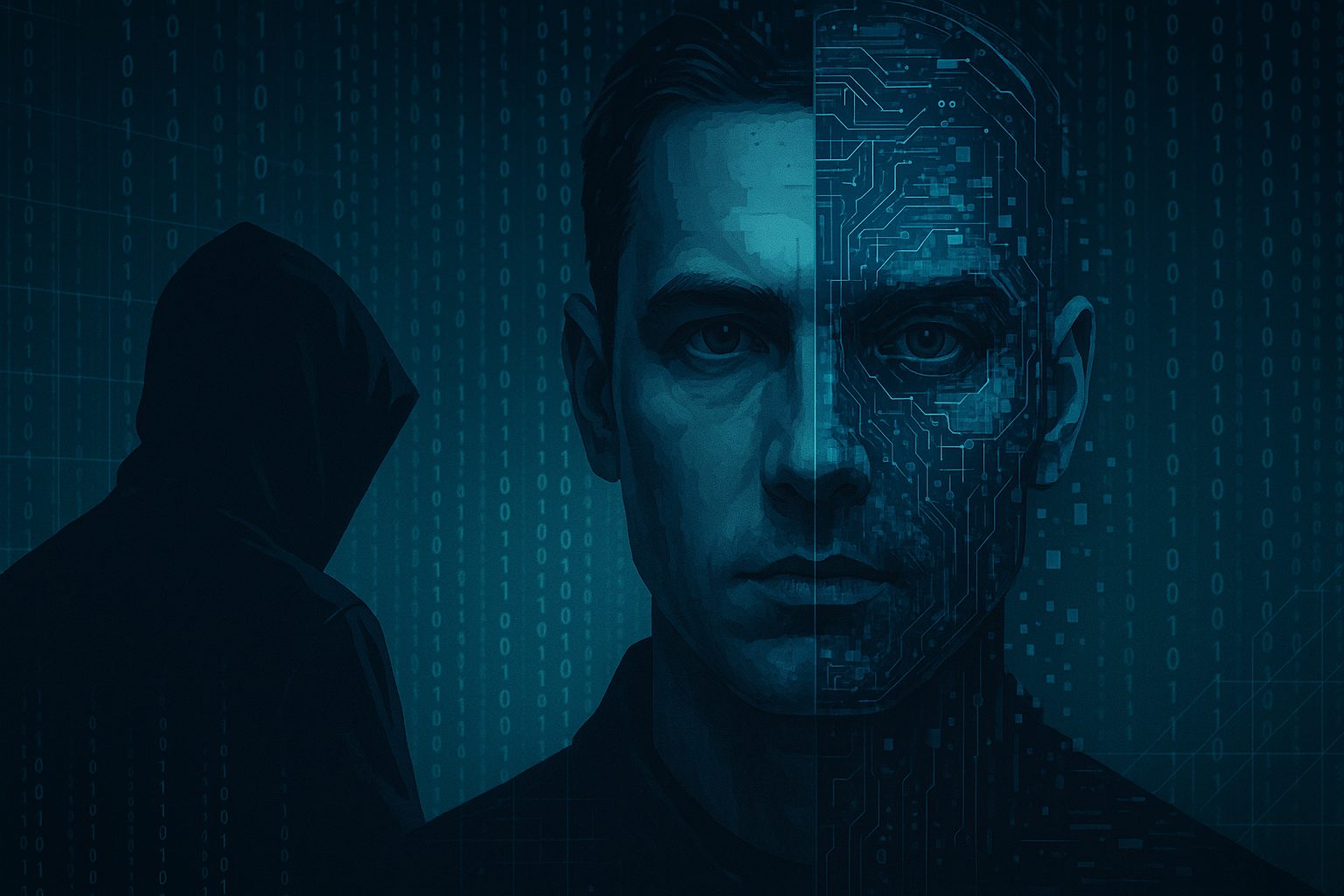
In an era where technology advances at an unprecedented pace, the emergence of deepfakes poses a significant threat to both personal and national security. Deepfakes, which employ artificial intelligence to manipulate or fabricate audio, images, and videos, can potentially deceive individuals and undermine the integrity of information.
As deepfakes proliferate across social media platforms and digital channels, they pose a grave threat to personal security by enabling identity theft, fraud, and the dissemination of false information. Moreover, the implications extend to national security, with deepfakes influencing political discourse, sowing distrust in institutions, and destabilizing societies.
Understanding the risks posed by deepfakes is imperative for safeguarding individuals and nations against malicious manipulation. Raising awareness of these threats and implementing effective mitigation strategies can help us strive to protect the integrity of information and preserve trust in the digital age.
In this blog, we will discuss the impact of deep fakes on personal and national security. But first, let’s define a deepfake.
What is a Deepfake?
Deepfake is an artificial intelligence technique that produces realistic-looking photo, audio, and video hoaxes. The word, which combines fake and deep learning, refers to the technology and the phony content that results from it. Deepfakes frequently replace one person with another in already-existing source material. Additionally, they produce unique videos in which real people are shown saying or doing things they never did.
The capacity of deepfakes to disseminate misleading information that looks to come from reliable sources is the biggest threat they provide.
Election advertising and the possibility of election meddling have also drawn criticism. A well-crafted and realistic deepfake that is distributed at the wrong moment has the potential to worsen social and political divisions, encourage violence against particular groups, and influence the outcome of a democratic election. Deepfakes have started to show their potentially harmful repercussions, as the technology has been used to malign people, perpetrate fraud, and trick people into joining online.
While deepfakes are dangerous, this technology does have uses in music and entertainment, video games, customer service, and caller response systems like call forwarding and receptionist services. With deepfake AI, you can bring images of humans captured a century ago in black and white to life. Businesses can replicate your voice, and some apps let you play a famous character in a film. You can watch news programs where the person on screen is a computer-generated picture rather than a real person.
So, how does the deepfake technology work? Let’s understand that in the next section.
How Do Deepfakes Work?
Deepfakes generates and refines fake content using two algorithms: a discriminator and a generator. The discriminator determines how realistic or phony the first version of the content is, while the generator creates a training data set based on the desired outcome. Repeating this procedure allows the discriminator to improve at identifying errors that the generator can fix and for the generator to improve at producing realistic material.
A generative adversarial network (GAN) is created when combined with the discriminator and generator algorithms. A GAN creates the fakes by first using deep learning to identify patterns in real photos. A GAN system looks at images of the target from various perspectives to collect all the information and viewpoints while producing a deepfake picture. The GAN examines the video from multiple perspectives while generating a deepfake and examining speech, movement, and behavior patterns. This data is passed through the discriminator several times to fine-tune the final image or video’s realism.
There are two methods for making deepfake videos. They can either use the target’s original video source, in which they are made to say and do things they have never done, or perform a face swap, in which they place the target’s face onto a video of someone else.
Here are three specific approaches to creating deepfakes:
- Deepfakes in Source Videos: A neural network-based deepfake autoencoder examines the content of a source video to comprehend pertinent characteristics of the target, like body language and facial expressions. It then overlays the original video with these attributes. The encoder of this autoencoder encrypts and applies these qualities to the target video.
- Audio Deepfakes: In audio deepfakes, a GAN clones the voice recording, builds a model from the vocal patterns, and applies the model to produce any desired speech pattern. Video game makers frequently employ this method.
- Deepfakes in Lip Syncing: Another prominent method used in deepfakes is lip syncing. Here, a voice recording is mapped to the video by the deepfake, giving the impression that the subject of the video is uttering the words on the recording. If the audio is a deepfake, the video adds another degree of deceit. Recurrent neural networks and NLP algorithms can facilitate the creation of deepfakes in lip-syncing.
Now, let’s understand the impact of deepfakes on personal and national security, respectively.
Impact of Deepfakes on Personal Security
Deepfakes present multifaceted threats to personal security, encompassing various forms of manipulation that can lead to significant harm.
One of the most concerning aspects is the potential for deepfakes to facilitate identity theft and fraud. With the ability to convincingly impersonate individuals, deepfakes can be used to create fake profiles, forge digital signatures, or even manipulate financial transactions. For instance, a deepfake video or audio clip could mimic a person’s voice or mannerisms, tricking others into believing they are interacting with a genuine individual. This could enable malicious actors to gain unauthorized access to sensitive accounts or extract confidential information.
Furthermore, deepfakes spread misinformation and fake news, exacerbating the challenge of discerning truth from fiction in the digital landscape. Deepfakes can manipulate public perception and erode trust in credible sources of information by manipulating images and videos to depict events that never occurred or distort the context of real events. Individuals may share or believe false narratives, leading to polarization and social unrest.
Besides this, deepfakes have the potential to inflict emotional and reputational harm on individuals by fabricating compromising or embarrassing content. For instance, deepfake pornographic videos, commonly known as “deepnudes,” superimpose the faces of individuals, specifically women, onto explicit imagery without their consent, leading to an invasion of privacy and emotional distress. Similarly, deepfakes can create defamatory content or manipulate images to depict individuals engaging in unethical or criminal behavior, tarnishing their reputation and undermining their credibility.
Moreover, the proliferation of deepfakes threatens personal security by eroding trust in digital media and communication channels. As deepfake technology continues to evolve and become more accessible, individuals may become skeptical of the authenticity of online content, leading to a breakdown in communication and interpersonal relationships.
Impact of Deepfake Technology on National Security
Deepfakes pose significant threats to national security as well. They exploit vulnerabilities in digital media and communication channels to manipulate public discourse, undermine trust in institutions, and destabilize societies.
One of the most pressing concerns is the potential for deepfakes to manipulate political discourse and influence elections. Fabricating audio, images, or videos depicting political figures engaging in unethical or criminal behavior using deepfakes is often used by political competitors to sway public opinion, incite social unrest, and compromise the integrity of democratic processes.
Furthermore, deepfakes can exacerbate geopolitical tensions and sow discord between nations. Malicious actors could use deepfakes to fabricate evidence of hostile actions or provocations, leading to diplomatic crises or even military conflicts. By exploiting existing mistrust and animosities between nations, deepfakes can escalate tensions and destabilize international relations, posing grave threats to global security. Another use of deepfakes is frequently made as a tool of espionage and covert operations, enabling state-sponsored actors or criminal organizations to infiltrate government agencies, military institutions, or critical infrastructure. For instance, deepfake videos could be used to impersonate high-ranking officials or military leaders, disseminate false intelligence, or manipulate decision-making processes, compromising national security and endangering the safety of citizens.
Besides this, deepfakes contribute to the erosion of public trust in institutions and authoritative sources of information. As deepfake technology becomes more sophisticated and accessible, individuals may become increasingly skeptical of the authenticity of news reports, government statements, or official communications. This erosion of trust undermines societal cohesion, weakens democratic institutions, and creates fertile ground for disinformation campaigns and extremist ideologies to thrive.
Addressing deepfake threats, whether they impact personal or national security, requires a multifaceted approach and coordinated effort involving several technologies and stakeholders. Individual protection can include technological solutions, legislative measures, and enhanced digital literacy efforts to mitigate the risks and protect individuals from digital exploitation. When it comes to national security, though, there needs to be a collaborative function between government agencies, technology companies, and civil society organizations to develop robust countermeasures, enhance digital resilience, and safeguard democratic processes and institutions against malicious manipulation.
In light of this, we would like to highlight some measures to counteract the impact of deepfakes on personal and national security.
Four Ways To Counteract Deepfakes and Ensure Personal and National Security
Impeding malevolent deepfakes is extremely difficult, if not impossible, due to the decentralized nature of the internet, disparities in international privacy regulations, and the ongoing progress of artificial intelligence. However, you can still minimize the negative impact of deepfakes on personal and national security in the following ways:
Using Deepfake Detection Technology
Numerous technologically based detection methods are currently in use. These systems employ forensic analysis, neural networks, and machine learning to examine digital content for discrepancies commonly linked to deepfakes.
Forensic techniques that look for facial manipulation can verify the authenticity of a piece of content. Developing and maintaining automated detection technologies that can analyze data in real-time and inline is still difficult. However, AI-based detection techniques will help defeat deepfakes if they are given enough time and widespread acceptance.
Implementing Strong Policy Reforms
Governments are trying to bring a degree of accountability and confidence in the AI value system by indicating to other users whether or not the content is real through the planned AI Act in Europe and the Executive Order on AI in the US.
Online platforms must also identify and label content produced by artificial intelligence (AI), and GenAI developers must include security measures to stop bad actors from exploiting the technology to create deepfakes. Policymakers around the world must maintain the momentum that has already been established to reach an international agreement on responsible AI and establish distinct redlines.
Enforcing traceability and watermarks to be incorporated into the deepfake development procedures before distribution by genAI and LLM providers could further add a layer of responsibility and indicate whether or not the content is synthetic. Malicious actors could get around this by making non-compliant tools or using jailbroken versions. To present a united front against the exploitation of such technology, international consensus is required on ethical norms, definitions of acceptable use, and classifications of what makes a malevolent deepfake.
Educating the Public
Media literacy and public awareness are the most important defenses against AI-powered social engineering and manipulation attacks. People should be taught how to distinguish between authentic and fake content from an early age, how deepfakes are spread and the social engineering and psychological tricks bad actors employ.
Critical thinking must be prioritized in media literacy initiatives, and participants should be given the means to independently check the content they are exposed to. According to research, media literacy effectively shields society from misinformation driven by artificial intelligence by decreasing people’s propensity to spread deepfakes.
Inculcating a Zero-Trust Mindset
The zero-trust strategy in cybersecurity refers to confirming everything rather than assuming anything. Applying this to people consuming information online requires ongoing verification and a healthy dose of cynicism.
This way of thinking is consistent with mindfulness practices, which advise people to interact with digital content purposefully and carefully rather than automatically reacting to emotionally charged material. Using cybersecurity mindfulness programs (CMPs) to cultivate a zero-trust mentality, users can better prepare themselves to handle AI-powered cyberthreats like deepfake, which are challenging to counter with traditional technology.
A zero-trust mentality is more important than ever since we spend more and more of our lives online and because the metaverse is almost here. Discerning between the synthetic and the real in these immersive settings will be crucial.
Security and Compliance with Akitra!
Establishing trust is a crucial competitive differentiator when courting new SaaS businesses in today’s era of deepfakes, data breaches, and compromised privacy. Customers and partners want assurances that their organizations are doing everything possible to prevent disclosing sensitive data and putting them at risk, and compliance certification fills that need.
Akitra offers an industry-leading, AI-powered Compliance Automation platform for SaaS companies. With its expertise in technology solutions and compliance, Akitra is well-positioned to assist companies in navigating the complexities of compliance and assisting in using automation tools to streamline compliance processes and put in best practices for cybersecurity posture. In addition, Akitra can provide invaluable guidance in implementing the necessary frameworks and methodologies that prevent malicious agents from manipulating sensitive information using AI technologies like deepfakes.
Using automated evidence collection and continuous monitoring, together with a full suite of customizable policies and controls as a compliance foundation, our compliance automation platform and services help our customers become compliance-ready for security standards, such as SOC 1, SOC 2, HIPAA, GDPR, PCI DSS, ISO 27001, ISO 27701, ISO 27017, ISO 27018, ISO 9001, ISO 13485, ISO 42001, NIST CSF, NIST 800-53, NIST 800-171, NIST 800-218, NIST AI RMF, FedRAMP, CCPA, CMMC, SOX ITGC, and more such as CIS AWS Foundations Benchmark, Australian ISM and Essential Eight etc. In addition, companies can use Akitra’s Risk Management product for overall risk management using quantitative methodologies such as Factorial Analysis of Information Risks (FAIR) and qualitative methods, including NIST-based for your company, Vulnerability Assessment and Pen Testing services, Third Party Vendor Risk Management, Trust Center, and AI-based Automated Questionnaire Response product to streamline and expedite security questionnaire response processes, delivering huge cost savings. Our compliance and security experts provide customized guidance to navigate the end-to-end compliance process confidently. Last but not least, we have also developed a resource hub called Akitra Academy which provides easy-to-learn short video courses on security, compliance, and related topics of immense significance for today’s fast-growing companies.
The benefits of our solution include enormous savings in time, human resources, and cost savings, including discounted audit fees with our audit firm partners. Customers can achieve compliance certification fast and cost-effectively, stay continuously compliant as they grow, and become certified under additional frameworks from our single compliance automation platform.
Build customer trust. Choose Akitra TODAY!
To book your FREE DEMO, contact us right here.