Modern organizations often believe they are secure, until someone proves otherwise.
The cloud dashboards look clean. Security scans show green checkmarks. Compliance reports are neatly organized. Everything appears under control.
Then a customer security questionnaire arrives. One question stands out: “When was your last vulnerability assessment and penetration testing exercise?”
Suddenly, teams realize that automated vulnerability scans alone do not tell the whole story. Real attackers don’t simply scan systems, they exploit weaknesses.
That’s where vulnerability assessment and penetration testing (VAPT) becomes essential.
VAPT combines two powerful security practices: identifying vulnerabilities and simulating real-world attacks, to help organizations understand how secure their systems truly are.
In this blog, we’ll break down what vulnerability assessment and penetration testing (VAPT) means, how vulnerability assessments differ from penetration tests, why organizations rely on VAPT to strengthen security, and how it supports both compliance and modern cybersecurity programs.
Key Takeaways
- VAPT combines vulnerability assessment and penetration testing.
- Vulnerability assessments identify weaknesses.
- Penetration testing validates exploitable risks.
- Automated scans alone are not enough.
- Regular VAPT testing improves security posture.
- VAPT supports SOC 2, ISO 27001, HIPAA, and PCI DSS compliance.
- Combining automation and expert testing delivers stronger security.
What Is Vulnerability Assessment and Penetration Testing?
Vulnerability assessment and penetration testing (VAPT) is a security testing methodology designed to identify and validate weaknesses within systems, applications, networks, and infrastructure.
It combines two complementary security approaches:
Vulnerability Assessment
A structured process that scans systems to identify known vulnerabilities, misconfigurations, and security gaps.
Penetration Testing
A simulated cyberattack performed by ethical hackers who attempt to exploit those vulnerabilities to determine their real-world impact.
When combined, vulnerability assessment and penetration testing provide both visibility and validation.
Vulnerability assessments answer: “What weaknesses exist?”
Penetration tests answer: “Can those weaknesses actually be exploited?”
Together, they provide organizations with a realistic understanding of their security posture.
Why Vulnerability Assessment Alone Isn’t Enough
Many companies run automated vulnerability scans regularly. These scans are valuable, but they only provide a partial view of risk. A vulnerability scanner might identify:
- An outdated library
- A misconfigured firewall rule
- An exposed API endpoint
But scanners cannot determine whether these vulnerabilities can be chained together to compromise a system. This is where penetration testing becomes critical.
Ethical hackers think like attackers. They analyze how vulnerabilities interact with each other, attempt privilege escalation, bypass security controls, and simulate realistic attack paths. The result is a much deeper understanding of risk. Organizations that perform vulnerability assessment and penetration testing regularly gain insight into how attackers might actually breach their systems.
Key Components of VAPT Testing
A complete vulnerability assessment and penetration testing program typically includes several stages.
1. Asset Discovery
Security teams first identify the systems being tested. These may include:
- Web applications
- APIs
- Cloud environments
- Internal networks
- Mobile applications
Without full asset visibility, vulnerabilities can remain hidden.
2. Vulnerability Scanning
During this stage, automated tools analyze systems for known security weaknesses. Common vulnerabilities discovered include:
- Outdated software versions
- Weak encryption configurations
- Open ports and services
- Known CVEs (Common Vulnerabilities and Exposures)
Resources such as the National Vulnerability Database (NVD) help organizations understand known vulnerabilities and their severity.
However, scanning alone does not confirm whether vulnerabilities are exploitable.
3. Penetration Testing
This phase simulates real-world attacks. Ethical hackers attempt to:
- Exploit vulnerabilities
- Gain unauthorized access
- Escalate privileges
- Move laterally across systems
- Access sensitive data
Penetration testing reveals the actual impact of vulnerabilities. For example, a seemingly minor misconfiguration could allow attackers to access an entire cloud environment.
4. Risk Validation
Not every vulnerability represents a real risk. VAPT testing helps security teams prioritize remediation by identifying vulnerabilities that attackers can realistically exploit.
This prevents teams from wasting time on low-impact issues while ignoring critical ones.
5. Remediation and Retesting
After vulnerabilities are fixed, systems should be retested to confirm remediation. This step ensures that security gaps have truly been closed.
Continuous VAPT testing helps organizations maintain a strong security posture over time.
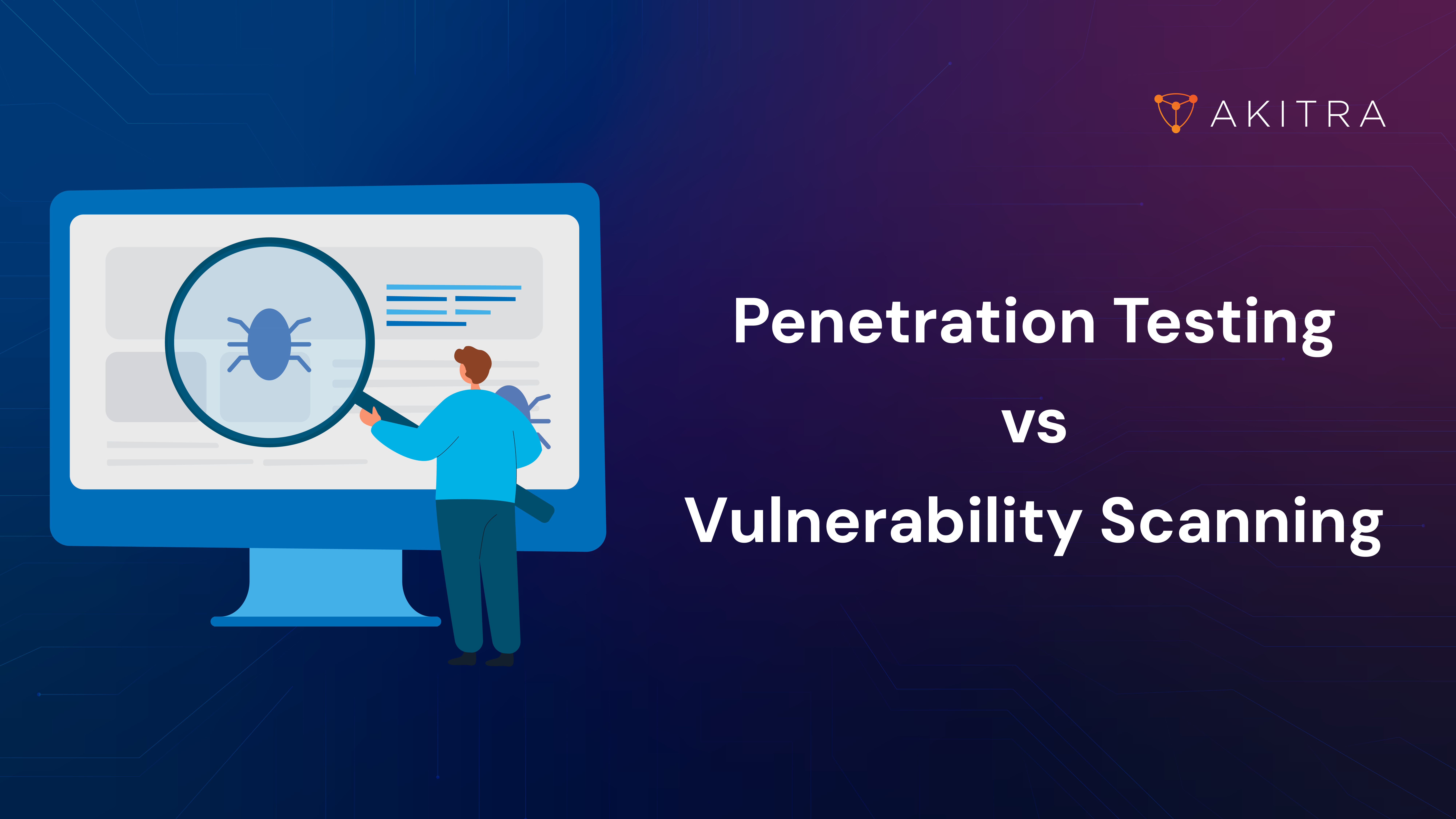
Vulnerability Assessment vs Penetration Testing
Although closely related, vulnerability assessment and penetration testing serve different purposes.
|
Feature |
Vulnerability Assessment |
Penetration Testing |
|
Purpose |
Identify vulnerabilities |
Exploit vulnerabilities |
|
Method |
Automated scanning |
Manual ethical hacking |
|
Scope |
Broad |
Focused |
|
Output |
Vulnerability list |
Exploitation proof |
|
Goal |
Visibility |
Validation |
Organizations need both approaches. Running only vulnerability scans can lead to overwhelming vulnerability lists with little context. Penetration testing prioritizes the vulnerabilities that actually matter.
This is why modern security programs rely on combined vulnerability assessment and penetration testing methodologies.
Why Businesses Need VAPT Testing Today
Cyber threats are evolving rapidly, and organizations face increasing pressure to demonstrate strong security practices. Vulnerability assessment and penetration testing support several critical objectives.
-
Strengthening Security Posture
VAPT testing reveals hidden weaknesses across applications, networks, and infrastructure. Organizations gain a realistic understanding of their exposure to cyber threats.
-
Supporting Compliance Requirements
Many compliance frameworks recommend or require security testing, including:
- SOC 2
- ISO 27001
- HIPAA
- PCI DSS
VAPT testing helps organizations demonstrate proactive risk management and security maturity.
-
Building Customer Trust
Enterprise buyers increasingly request penetration testing reports as part of vendor security assessments. Organizations that perform regular VAPT testing demonstrate a commitment to protecting sensitive data.
-
Preventing Real-World Breaches
By identifying vulnerabilities before attackers do, organizations reduce the likelihood of security incidents. A single critical vulnerability left undiscovered can result in major data breaches. VAPT helps prevent that risk.
How Akitra VAPT Helps Validate Your Security
Identifying vulnerabilities is only the first step. What organizations really need to know is whether those weaknesses can actually be exploited.
Akitra’s Vulnerability Assessment and Penetration Testing (VAPT) services help answer that question. By combining automated vulnerability discovery with expert-led penetration testing, Akitra simulates real attack scenarios to reveal the risks that truly matter.
Instead of overwhelming teams with long vulnerability lists, Akitra delivers prioritized findings, actionable remediation guidance, and compliance-ready reports that support frameworks like SOC 2 and ISO 27001.
What makes Akitra different is its integration with the Andromeda® Continuous Compliance Platform, allowing organizations to connect security testing with ongoing compliance and risk management.
The result: clear visibility into exploitable vulnerabilities, faster remediation, and stronger security posture.
Best Practices for Implementing VAPT
Organizations should follow several best practices to maximize the value of vulnerability assessment and penetration testing.
-
Test Regularly
Security testing should not be a one-time activity. New vulnerabilities appear constantly as systems evolve.
-
Test Before Major Releases
Applications should undergo penetration testing before significant software releases to identify vulnerabilities early.
-
Combine Automation with Human Expertise
Automated vulnerability scanning is useful, but human-led penetration testing is essential for identifying complex attack paths.
-
Integrate VAPT with Security Programs
Security testing should align with broader risk management, compliance, and security monitoring programs.
Security, AI Risk Management, and Compliance with Akitra!
In the competitive landscape of SaaS businesses, trust is paramount amidst data breaches and privacy concerns. Akitra addresses this need with its leading Agentic AI-powered Compliance Automation platform. Our platform empowers customers to prevent sensitive data disclosure and mitigate risks, meeting the expectations of customers and partners in the rapidly evolving landscape of data security and compliance. Through automated evidence collection and continuous monitoring, paired with customizable policies, Akitra ensures organizations are compliance-ready for various frameworks such as SOC 1, SOC 2, HIPAA, GDPR, PCI DSS, ISO 27001, ISO 27701, ISO 27017, ISO 27018, ISO 9001, ISO 13485, ISO 42001, NIST 800-53, NIST 800-171, NIST AI RMF, FedRAMP, CCPA, CMMC, SOX ITGC, and more such as CIS AWS Foundations Benchmark, Australian ISM and Essential Eight etc. In addition, companies can use Akitra’s Risk Management product for overall risk management using quantitative methodologies such as Factorial Analysis of Information Risks (FAIR) and qualitative methods, including NIST-based for your company, Vulnerability Assessment and Pen Testing services, Third Party Vendor Risk Management, Trust Center, and AI-based Automated Questionnaire Response product to streamline and expedite security questionnaire response processes, delivering huge cost savings. Our compliance and security experts provide customized guidance to navigate the end-to-end compliance process confidently. Last but not least, we have also developed a resource hub called Akitra Academy, which offers easy-to-learn short video courses on security, compliance, and related topics of immense significance for today’s fast-growing companies.
Our solution offers substantial time and cost savings, including discounted audit fees, enabling fast and cost-effective compliance certification. Customers achieve continuous compliance as they grow, becoming certified under multiple frameworks through a single automation platform.
Build customer trust. Choose Akitra TODAY!To book your FREE DEMO, contact us right here.
FAQ’S
How often should organizations perform VAPT testing?
Most organizations perform VAPT testing annually or after major infrastructure changes, though high-risk environments may require more frequent testing.
What is the difference between vulnerability assessment and penetration testing?
Vulnerability assessment identifies security weaknesses, while penetration testing attempts to exploit those weaknesses to determine their real-world impact.
Is VAPT required for compliance frameworks?
Many frameworks such as SOC 2, PCI DSS, and ISO 27001 recommend or require vulnerability assessments and penetration testing.
Can automated tools replace penetration testing?
Automated tools help identify vulnerabilities, but they cannot fully simulate real attacker behavior. Human-led penetration testing remains essential.