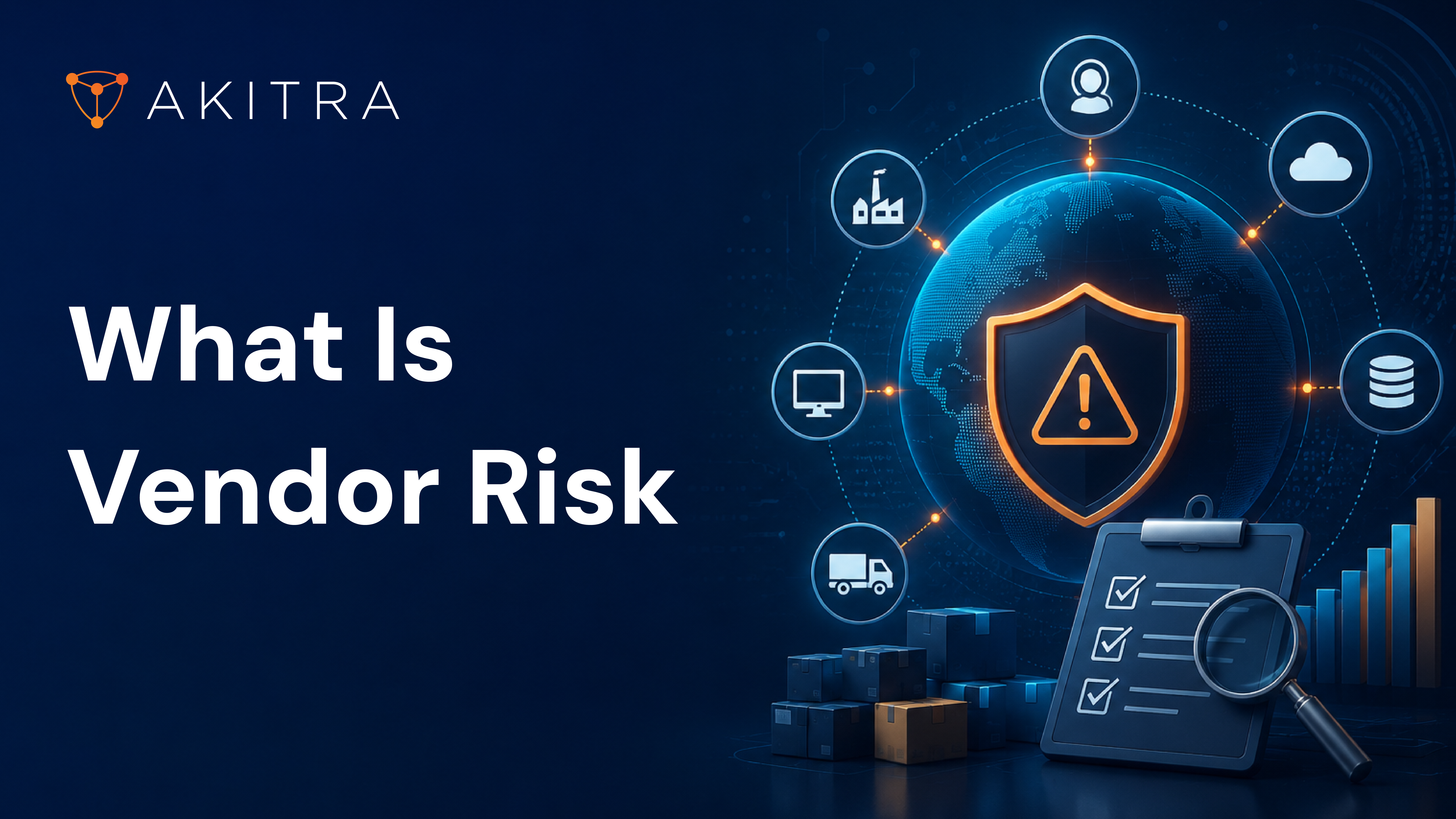
Third-party vendors play a critical role in modern business. From cloud infrastructure and payment processors to HR platforms and managed service providers, organizations depend on external partners to operate efficiently. However, every vendor also introduces operational, cybersecurity, compliance, and financial risks.
According to IBM’s Cost of a Data Breach Report, third-party involvement remains one of the leading contributors to data breaches. As regulations such as SOC 2, ISO 27001, HIPAA, PCI DSS, GDPR, and DORA become more demanding, organizations can no longer rely on periodic vendor reviews or manual spreadsheets.
This blog explores the 10 most common vendor risk management mistakes, explains why they occur, and shares practical best practices to help you build a stronger, more resilient vendor risk management program.
Key Takeaways
- Vendor risk management is a continuous process, not a one-time assessment.
- High-risk vendors require deeper due diligence than low-risk vendors.
- Fourth-party dependencies can create hidden business risks.
- Automation improves assessment accuracy and audit readiness.
- Continuous monitoring helps identify vendor risks before they become incidents.
- AI-powered platforms simplify vendor onboarding, assessments, and compliance monitoring.
Why Vendor Risk Management Matters
Every vendor that accesses your systems, data, or business processes expands your organization’s attack surface.
Poor vendor oversight can lead to:
- Data breaches
- Compliance violations
- Service disruptions
- Financial losses
- Reputational damage
- Supply chain attacks
An effective Vendor Risk Management (VRM) program helps organizations evaluate vendors before onboarding, continuously monitor risks, and respond quickly when issues arise.
Top 10 Vendor Risk Management Mistakes
1. Treating Vendor Risk Management as a One-Time Activity
Many organizations assess vendors only during onboarding and never review them again.
Business Impact
- Outdated risk assessments
- Missed security changes
- Increased exposure to cyber threats
Best Practice
Continuously monitor vendor security posture, certifications, compliance status, and external threat intelligence throughout the vendor relationship.
2. Using the Same Assessment for Every Vendor
Not every vendor presents the same level of risk. Applying identical assessments wastes resources while overlooking critical vendors.
Business Impact
- Inefficient reviews
- Poor prioritization
- High-risk vendors receiving insufficient scrutiny
Best Practice
Classify vendors based on:
- Business criticality
- Data sensitivity
- System access
- Regulatory impact
- Financial importance
This enables risk-based assessments and more effective resource allocation.
3. Ignoring Fourth-Party Risk
Your vendors often rely on subcontractors, cloud providers, and other service providers. If these fourth parties experience a breach or outage, your business may still be affected.
Business Impact
- Hidden supply chain risks
- Limited visibility
- Increased operational disruption
Best Practice
Request transparency into critical subcontractors and monitor significant fourth-party dependencies as part of your overall third-party risk strategy.
4. Relying on Manual Risk Assessments
Emails, spreadsheets, and disconnected questionnaires slow the assessment process and increase the likelihood of errors.
Business Impact
- Delayed onboarding
- Inconsistent scoring
- Missing documentation
- Difficult audits
Best Practice
Automate vendor questionnaires, evidence collection, approvals, and reporting using a centralized vendor risk management platform.
5. Assuming Vendor Compliance Equals Your Compliance
A vendor may hold certifications like SOC 2 or ISO 27001, but your organization remains responsible for managing third-party risk.
Business Impact
- Regulatory penalties
- Compliance gaps
- Audit findings
Best Practice
Verify vendor certifications regularly and ensure controls align with your own compliance obligations under frameworks such as SOC 2, ISO 27001, HIPAA, PCI DSS, GDPR, and NIST CSF.
6. Excluding Vendors from Incident Response Planning
A vendor security incident can quickly become your incident. Without defined communication channels and responsibilities, response times increase significantly.
Business Impact
- Delayed breach response
- Extended downtime
- Poor customer communication
Best Practice
Include critical vendors in incident response planning, define breach notification timelines, and conduct joint tabletop exercises where appropriate.
7. Managing Vendor Risk in Silos
Vendor risk management should not be owned solely by IT or security. Procurement, legal, compliance, finance, and business teams all play an important role.
Business Impact
- Duplicate assessments
- Inconsistent decisions
- Poor governance
Best Practice
Create a cross-functional vendor risk governance program supported by shared dashboards and standardized workflows.
8. Skipping Vendor Reassessments During Contract Renewals
Vendor environments evolve over time. Certifications expire, ownership changes, and security controls mature, or deteriorate.
Business Impact
- Renewing contracts with outdated risk information
- Increased compliance exposure
Best Practice
Schedule reassessments before contract renewals based on vendor criticality and automatically trigger reviews when significant changes occur.
9. Failing to Maintain a Centralized Vendor Repository
Vendor contracts, questionnaires, certifications, and assessments are often stored across multiple systems.
Business Impact
- Lost documentation
- Audit delays
- Poor visibility
Best Practice
Maintain a centralized repository that stores:
- Vendor profiles
- Risk scores
- Contracts
- Compliance documents
- Assessment history
- Remediation activities
A single source of truth improves reporting and audit readiness.
10. Delaying AI and Automation Adoption
Vendor ecosystems continue to grow while threats evolve rapidly. Manual processes cannot keep pace.
Business Impact
- Reactive risk management
- Slower decision-making
- Higher operational costs
Best Practice
Use AI-powered automation to:
- Prioritize vendor risks
- Automate questionnaires
- Monitor compliance continuously
- Generate audit-ready evidence
- Recommend remediation actions
Automation allows teams to focus on strategic risk decisions instead of repetitive administrative tasks.
Akitra Insight
Many organizations classify vendors simply as High, Medium, or Low risk. A more effective approach evaluates vendors across five dimensions:
|
Assessment Area |
Why It Matters |
|
Business Criticality |
Operational impact if the vendor fails |
|
Data Sensitivity |
Access to confidential or regulated data |
|
System Access |
Level of access to applications and infrastructure |
|
Compliance Requirements |
Regulatory obligations supported by the vendor |
|
Financial Stability |
Long-term reliability and business continuity |
This multidimensional approach produces more accurate risk prioritization than relying on a single overall score.
Conclusion
Vendor risk management has evolved from a periodic compliance exercise into a continuous business function. Organizations that classify vendors effectively, automate assessments, continuously monitor risks, and involve stakeholders across procurement, security, compliance, and legal are better positioned to reduce cyber risk and maintain operational resilience.
By avoiding these common mistakes and adopting modern vendor risk management practices, organizations can strengthen third-party relationships, improve compliance, and build greater trust with customers and regulators.
Platforms such as Akitra Andromeda® Vendor Risk Management help organizations automate vendor onboarding, security assessments, continuous monitoring, and compliance tracking, making it easier to build a scalable, audit-ready vendor risk management program.
Security, AI Risk Management, and Compliance with Akitra!
In the competitive landscape of SaaS businesses, trust is paramount amidst data breaches and privacy concerns. Akitra addresses this need with its leading Agentic AI-powered Compliance Automation platform. Our platform empowers customers to prevent sensitive data disclosure and mitigate risks, meeting the expectations of customers and partners in the rapidly evolving landscape of data security and compliance. Through automated evidence collection and continuous monitoring, paired with customizable policies, Akitra ensures organizations are compliance-ready for various frameworks such as SOC 1, SOC 2, HIPAA, GDPR, PCI DSS, ISO 27001, ISO 27701, ISO 27017, ISO 27018, ISO 9001, ISO 13485, ISO 42001, NIST 800-53, NIST 800-171, NIST AI RMF, FedRAMP, CCPA, CMMC, SOX ITGC, and more such as CIS AWS Foundations Benchmark, Australian ISM and Essential Eight etc. In addition, companies can use Akitra’s Risk Management product for overall risk management using quantitative methodologies such as Factorial Analysis of Information Risks (FAIR) and qualitative methods, including NIST-based for your company, Vulnerability Assessment and Pen Testing services, Third Party Vendor Risk Management, Trust Center, and AI-based Automated Questionnaire Response product to streamline and expedite security questionnaire response processes, delivering huge cost savings. Our compliance and security experts provide customized guidance to navigate the end-to-end compliance process confidently. Last but not least, we have also developed a resource hub called Akitra Academy, which offers easy-to-learn short video courses on security, compliance, and related topics of immense significance for today’s fast-growing companies.
Our solution offers substantial time and cost savings, including discounted audit fees, enabling fast and cost-effective compliance certification. Customers achieve continuous compliance as they grow, becoming certified under multiple frameworks through a single automation platform.
Build customer trust. Choose Akitra TODAY!To book your FREE DEMO, contact us right here.
FAQ’S
Why are vendor risk management mistakes so common?
They occur because many companies view vendor risk as a compliance checklist rather than a continuous security function. Lack of automation and siloed processes further increase human error.
How can automation help reduce vendor risk management mistakes?
Automation platforms like Akitra Andromeda® continuously collect, analyze, and update vendor data — minimizing manual work and ensuring no vendor risk goes unnoticed.
How often should I reassess my vendors?
High-risk vendors should be reviewed quarterly or bi-annually, while low-risk vendors can be assessed annually. Automation ensures timely re-assessments without extra administrative effort.
What’s the best way to start improving my vendor risk management program?
Start by identifying critical vendors, classifying them by risk, and adopting an automated solution like Akitra Andromeda® that integrates compliance, risk scoring, and reporting in one unified platform.